


Paintless Dent Repair
Professional PDR That Preserves Your Vehicle’s Factory Finish
Dents and dings don’t always require body filler, sanding, or repainting. Paintless Dent Repair (PDR) is an advanced repair method that can restore many types of vehicle dents while preserving the original factory paint.
At Dentagon Auto Hail Repair, we specialize in professional Paintless Dent Repair for hail damage, door dings, minor dents, creases, and other types of damage where the vehicle’s paint remains intact.
Using specialized PDR tools and precision techniques, our experienced technicians carefully reshape damaged metal back toward its original position without the need for traditional bodywork whenever possible.
The result is a high-quality repair that maintains your vehicle’s original finish, protects its value, and can often be completed faster than conventional dent repair.
Whether you have a single annoying door ding or hundreds of dents caused by a Colorado hailstorm, our team can inspect your vehicle and determine whether Paintless Dent Repair is the right solution.
What Is Paintless Dent Repair?
Paintless Dent Repair, commonly called PDR, is a specialized method used to remove dents from vehicle body panels without repainting the damaged area.
Instead of grinding away factory paint, applying body filler, sanding the panel, and repainting it, PDR focuses on restoring the original metal.
Technicians use specialized tools to access the backside of the damaged panel whenever possible. Through a series of precise movements, pressure is carefully applied to gradually return the metal to its original shape.
In other situations, specialized techniques may be used from the exterior of the panel when backside access is limited.
Because the vehicle’s original paint remains intact, Paintless Dent Repair eliminates many of the concerns associated with conventional body repair, including paint matching and refinishing.
PDR requires extensive training, patience, specialized equipment, and an understanding of how automotive metals respond to pressure. Proper Paintless Dent Repair is much more than simply pushing a dent out—it is a precision repair process designed to restore the panel without creating additional damage.
What Types of Dents Can Paintless Dent Repair Fix?
Paintless Dent Repair can be used for many different types of vehicle damage.
Common repairs include:
• Hail damage
• Door dings
• Shopping cart dents
• Minor body dents
• Shallow creases
• Parking lot dents
• Small impact dents
• Roof dents
• Hood dents
• Trunk dents
• Fender dents
• Quarter-panel dents
The size of a dent alone does not always determine whether PDR can be used.
Technicians also evaluate the dent’s depth, location, shape, accessibility, metal condition, and whether the factory paint has been damaged.
That is why having the vehicle professionally inspected is important before deciding which repair method is appropriate.
Benefits of Paintless Dent Repair
When a vehicle qualifies for PDR, there are several significant advantages compared with traditional dent repair.
Preserves Your Factory Paint
One of the biggest advantages of Paintless Dent Repair is that the vehicle’s original factory finish remains intact.
There is no need to repaint the repaired panel when the damage can be successfully restored using PDR.
Helps Maintain Vehicle Value
Original factory paint is valuable.
Avoiding unnecessary refinishing helps preserve the originality of the vehicle and can be especially important when selling or trading it in.
No Paint Matching
Modern automotive paint can be extremely difficult to match perfectly.
Paintless Dent Repair eliminates paint-matching concerns because the original finish remains on the vehicle.
Faster Repair Process
Traditional repairs can involve sanding, body filler, primer, paint, clear coat, curing, and finishing.
PDR eliminates many of these steps and can often reduce repair time significantly.
Permanent Dent Repair
When performed correctly, Paintless Dent Repair permanently reshapes the damaged metal.
The dent isn’t filled or hidden underneath another material.
Environmentally Friendly
Because PDR generally does not require body filler, primer, paint, or other refinishing materials, fewer chemicals and materials are used during the repair process.
Paintless Dent Repair for Hail Damage
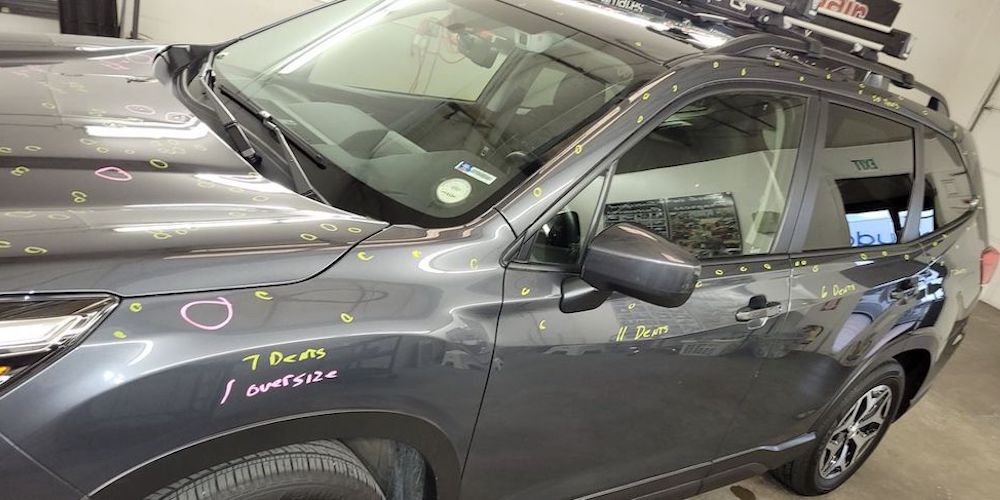
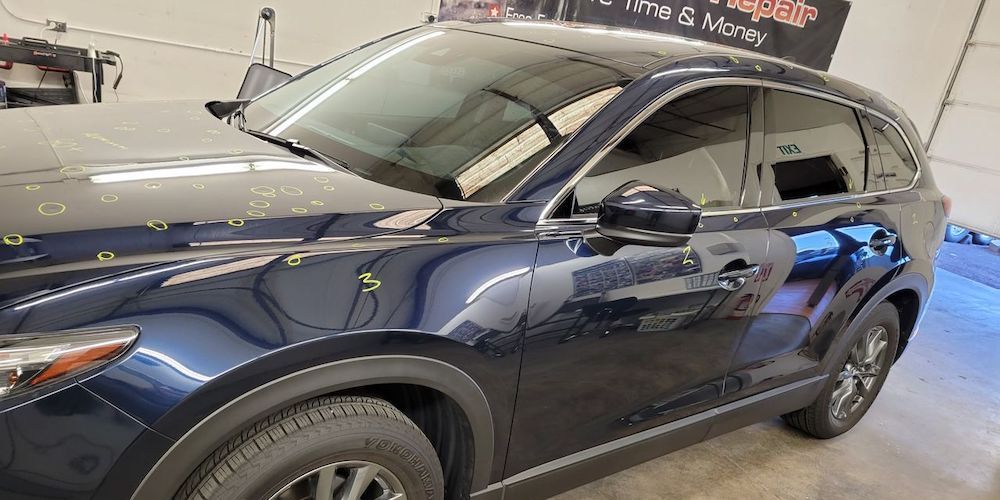
Paintless Dent Repair is one of the most effective methods available for repairing automotive hail damage.
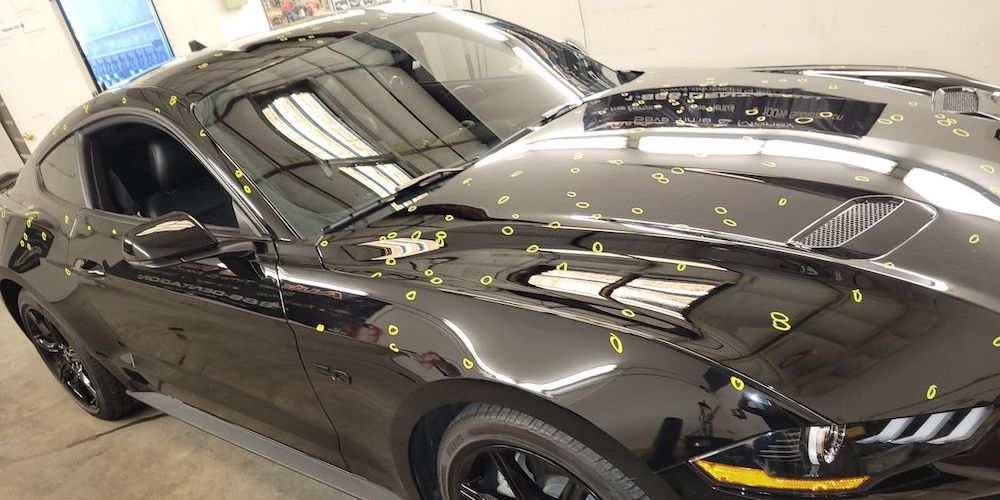
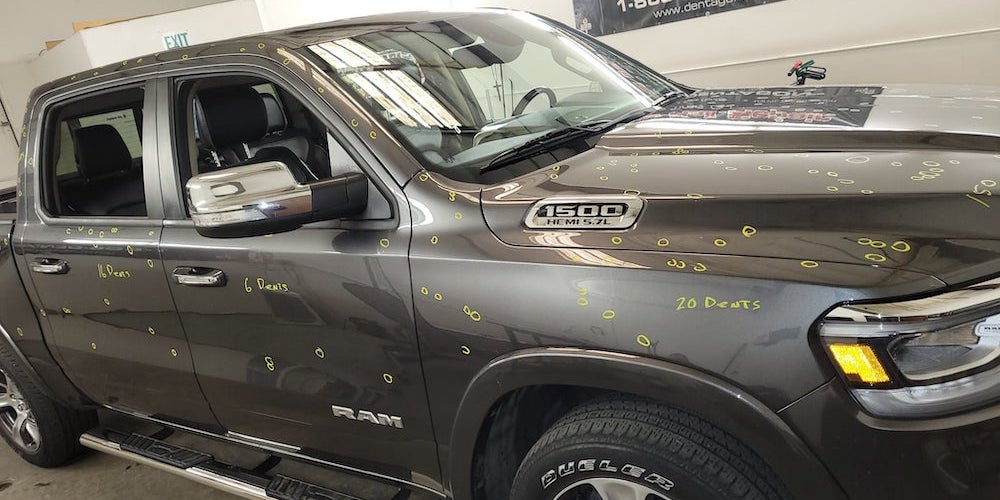
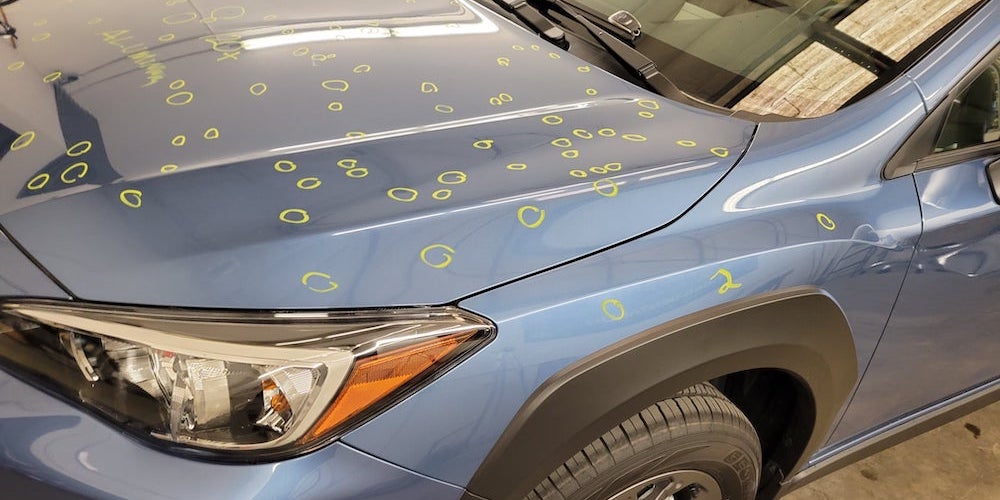
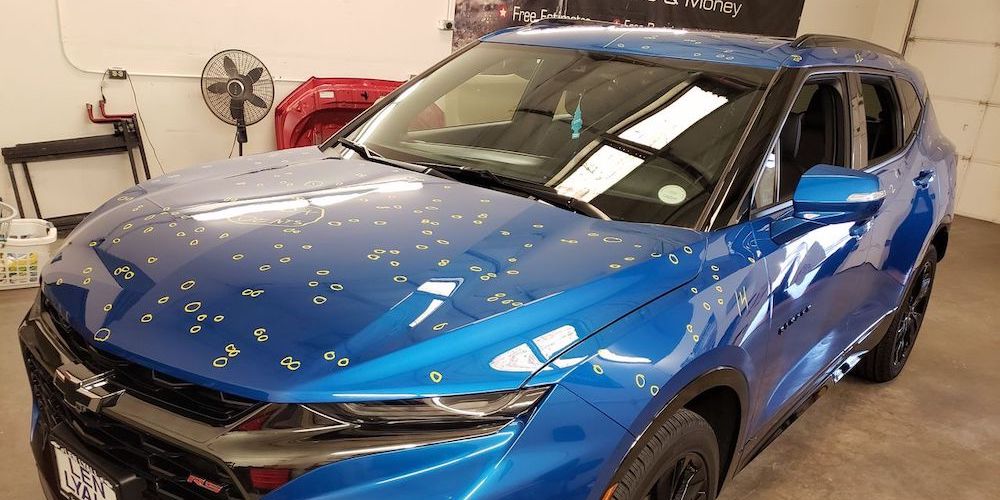
Colorado hailstorms can leave dozens or even hundreds of dents across a vehicle within minutes. The roof, hood, trunk, doors, fenders, quarter panels, and other exposed surfaces can all be affected.
Although this damage may look severe, many hail-damaged vehicles are excellent candidates for PDR because the dents often occur without breaking the factory paint.
Rather than repainting numerous panels, our technicians can carefully restore individual dents while preserving the vehicle’s original finish.
For extensive hail damage, technicians use specialized lighting systems to identify dents that may be difficult to see under ordinary lighting.
Each damaged panel is evaluated individually to determine the appropriate repair technique.
If your vehicle has recently been through a hailstorm, schedule a professional inspection even if the damage initially appears minor. Hail dents can be difficult to identify without proper lighting and inspection equipment.
Learn more about our Hail Damage Repair services:
Paintless Dent Repair for Door Dings
Door dings are among the most common types of vehicle damage.
Parking lots, shopping centers, garages, neighboring vehicles, and everyday accidents can leave noticeable dents in doors and body panels.
Even a small ding can become difficult to ignore once you know it’s there.
When the paint has not been cracked or significantly damaged, many door dings can be repaired using Paintless Dent Repair.
PDR allows the technician to reshape the affected area without unnecessarily repainting the entire panel.
Can Large Dents Be Repaired With PDR?
Sometimes.
Paintless Dent Repair isn’t limited exclusively to tiny dents.
Some larger dents can be repaired successfully with PDR when the metal has not been stretched beyond repair and the paint remains intact.
A larger shallow dent may actually be a better PDR candidate than a much smaller but extremely sharp dent.
Several factors determine repairability:
• Depth of the dent
• Size of the damaged area
• Location of the damage
• Severity of the impact
• Condition of the paint
• Amount of metal stretching
• Access behind the damaged panel
• Previous body repairs
Our technicians evaluate these factors during the inspection before recommending a repair method.
When Is Paintless Dent Repair Not Recommended?
PDR is an excellent repair method, but it isn’t appropriate for every type of damage.
Traditional body repair may be necessary when:
• Paint is cracked or severely damaged
• Metal has been excessively stretched
• The panel has sharp or severe structural damage
• The damaged area has previous body filler
• Access to the damage makes PDR impractical
• The panel itself needs replacement
• Collision damage has affected structural components
Dentagon will inspect the damage and explain the appropriate repair options.
Our goal is to recommend the repair method that makes sense for your vehicle rather than forcing PDR onto damage that requires another solution.
How Does Paintless Dent Repair Work?
Paintless Dent Repair is a highly specialized process requiring precision and patience.
1. Inspect the Damage
The process begins with a detailed inspection.
We evaluate the size, depth, location, paint condition, and accessibility of each dent.
2. Determine Panel Access
The technician determines the safest way to reach the damaged area.
Depending on the location, certain trim pieces, interior panels, lights, or other components may need to be carefully removed.
3. Identify the Dent With Specialized Lighting
Professional PDR lighting helps technicians see subtle changes in the vehicle’s surface.
These reflections allow the technician to identify high and low areas that can be difficult to see with normal lighting.
4. Carefully Reshape the Metal
Using specialized PDR tools, the technician gradually works the damaged metal back toward its original position.
This process may require numerous small, controlled movements rather than one large push.
5. Refine the Panel
The technician continues working the area until the surface has been restored as closely as possible to its original shape.
6. Complete a Final Quality Inspection
Once repairs are complete, the panel is carefully inspected under professional lighting to verify the quality of the repair.
How Long Does Paintless Dent Repair Take?
Repair time depends on the amount and severity of damage.
A vehicle with a minor door ding requires significantly less work than a vehicle covered with hundreds of hail dents.
Factors affecting repair time include:
• Number of dents
• Size and depth of dents
• Location of damage
• Number of affected panels
• Panel accessibility
• Parts or trim requiring removal
• Severity of hail damage
• Insurance approval when a claim is involved
After inspecting your vehicle, our team can provide a better understanding of the expected repair process.
Does Insurance Cover Paintless Dent Repair?
When Paintless Dent Repair is being used to repair covered damage such as hail, comprehensive auto insurance will typically cover the repair subject to the terms of your policy and deductible.
Insurance companies commonly recognize PDR as an appropriate repair method for qualifying hail damage.
If you’re filing a hail damage claim, Dentagon can help make the process easier.
We assist with:
• Insurance claim guidance
• Reviewing insurance estimates
• Documenting vehicle damage
• Communicating with insurance adjusters
• Supplemental estimates when additional damage is identified
• Repair documentation
Insurance estimates don’t always identify every dent during the initial inspection. Additional damage can become visible once the vehicle is inside a properly lit repair environment or once parts are removed.
When appropriate, supplemental documentation can be submitted to the insurance company for review.
Learn more about our Insurance Claims Assistance program.
Deductible Assistance for Qualifying Hail Repairs
Some customers completing qualifying insurance-covered hail repairs may be eligible for deductible assistance.
Eligibility depends on the repair and individual circumstances.
We’ll explain any available options during your inspection so you understand the process before repairs begin.
Learn more about our Deductible Assistance program.
Will Paintless Dent Repair Show Up on CARFAX?
Paintless Dent Repair itself does not automatically determine whether something appears on a vehicle history report.
Vehicle history information can come from insurance companies, repair facilities, police reports, state agencies, and other data sources.
If maintaining your vehicle’s original condition and value is important to you, one of PDR’s primary advantages is that it can restore qualifying damage without repainting the affected panels.
Does PDR Damage the Paint?
When performed correctly on appropriate damage, Paintless Dent Repair is designed specifically to preserve the existing factory paint.
Modern factory automotive finishes have a degree of flexibility that allows experienced PDR technicians to manipulate the underlying metal carefully.
However, paint condition matters.
Older paint, previously refinished panels, existing cracks, or severely damaged areas may respond differently. That’s another reason a professional inspection is important before beginning repairs.
Is Paintless Dent Repair Better Than Traditional Dent Repair?
Neither method is universally better. The appropriate method depends on the damage.
When a dent qualifies for PDR, Paintless Dent Repair offers significant advantages because it can restore the panel without altering the factory finish.
Traditional body repair may be necessary when there is significant paint damage, severe metal stretching, structural damage, or a panel that cannot reasonably be restored with PDR.
At Dentagon, we’ll inspect your vehicle and recommend the repair approach appropriate for the damage.
Why Choose Dentagon for Paintless Dent Repair?
Paintless Dent Repair is a specialized skill where technician experience and attention to detail matter.
Dentagon Auto Hail Repair is committed to delivering professional repairs and an exceptional customer experience from the initial inspection through final delivery.
Drivers choose Dentagon for:
✓ Free Damage Inspections
✓ Paintless Dent Repair Specialists
✓ Hail Damage Repair Expertise
✓ Insurance Claims Assistance
✓ Deductible Assistance for Qualifying Repairs
✓ Lifetime Warranty
✓ Honest Repair Recommendations
✓ Exceptional Customer Service
We want you to understand what happened to your vehicle, what can be repaired, and what to expect throughout the process.
Professional Paintless Dent Repair Throughout the Denver Metro Area
Dentagon provides Paintless Dent Repair for drivers throughout Denver and surrounding communities.
Our service area includes:
• Arvada
• Aurora
• Brighton
• Broomfield
• Castle Rock
• Centennial
• Denver
• Englewood
• Highlands Ranch
• Lakewood
• Littleton
• Parker
• Westminster
Whether you have one frustrating door ding or extensive hail damage across multiple panels, our team can inspect your vehicle and determine whether PDR is the right repair solution.
Schedule Your Free Paintless Dent Repair Inspection
Don’t let dents and dings continue to take away from the appearance and value of your vehicle.
Whether you’re dealing with a single door ding, several minor dents, or widespread hail damage, Dentagon Auto Hail Repair can inspect your vehicle and determine whether Paintless Dent Repair is the right solution.
We’ll explain the damage, discuss your repair options, answer your questions, and help you understand the next steps.
FAQS
Repair time depends on the size, location, and number of dents. A minor dent or door ding may require significantly less time than extensive hail damage involving multiple panels. After inspecting your vehicle, Dentagon can give you a better idea of the expected repair timeline.
Yes. An inspection can determine whether PDR is appropriate and identify additional damage that may not be obvious under ordinary lighting.
Many aluminum panels can be repaired using PDR, although aluminum behaves differently from steel and requires specialized techniques.
Typically, no. Preserving the original paint is one of the primary benefits of Paintless Dent Repair.
No. Paintless Dent Repair reshapes the original metal without using traditional body filler.
No. Repairability depends on the dent’s size, depth, location, metal stretching, paint condition, and accessibility.
If the paint is cracked, chipped, or severely damaged, additional repair and refinishing may be necessary.
Yes. Hail damage is one of the most common applications for Paintless Dent Repair when the vehicle’s factory paint remains intact.
Yes. When PDR is performed correctly, the metal is physically reshaped rather than simply covered with filler.
For additional information about repairs, insurance claims, deductibles, warranties, and scheduling, visit our Frequently Asked Questions page.
Happy Customers
The Hail Claim Process
Dentagon will help you file your claim, negotiate with your insurance company and repair your vehicle to pre-storm condition.