


Should You Repair Hail Damage Before Winter? What Denver Drivers Should Know
Should You Fix Hail Damage Before Colorado Winter Arrives?
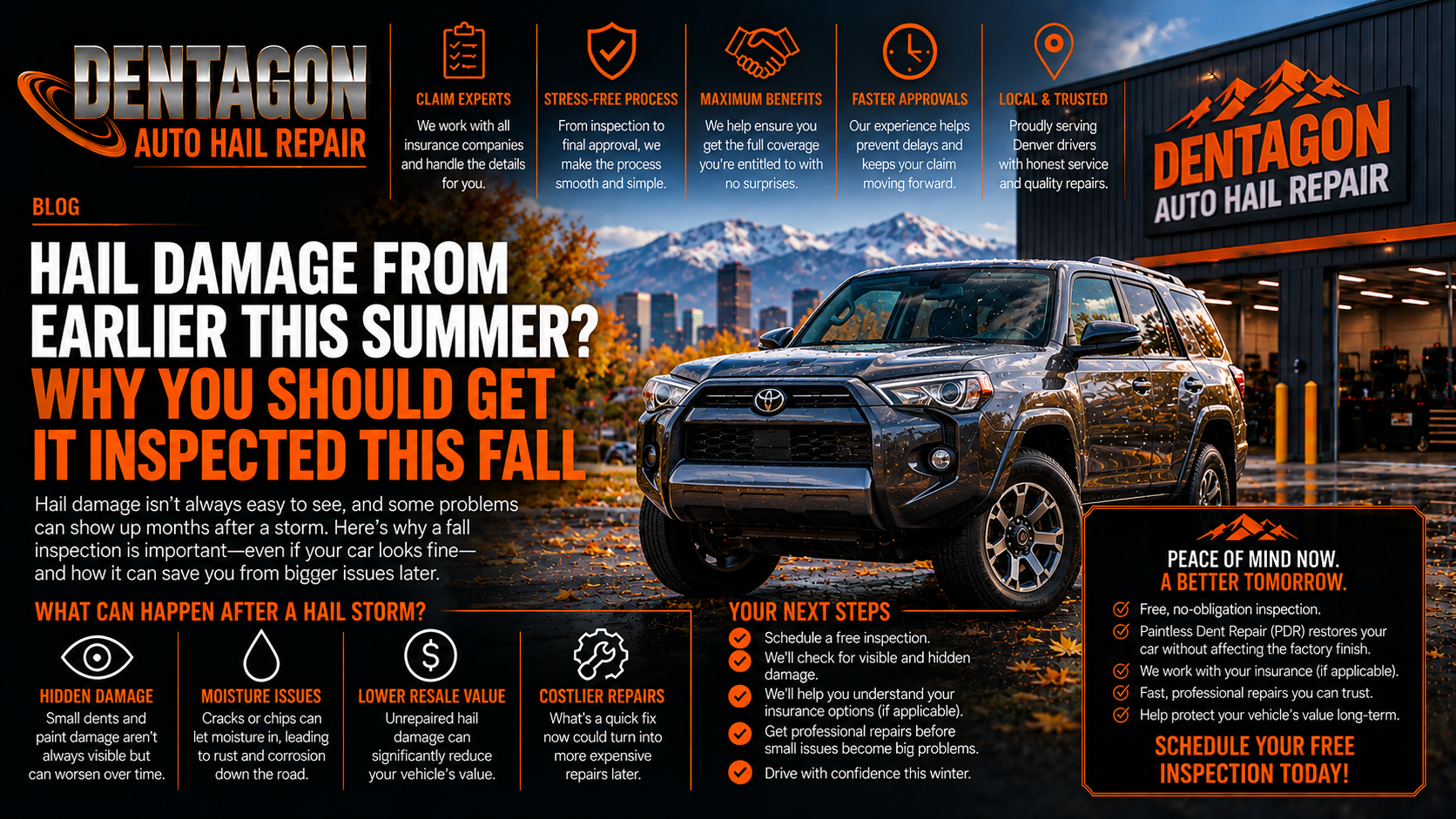
If your vehicle was damaged by hail this spring or summer and you still haven’t had it repaired, fall is a good time to take another look at it.
Colorado’s hail season can leave vehicles with dozens—or even hundreds—of dents across the hood, roof, trunk, doors, fenders, and quarter panels.
Some drivers file an insurance claim immediately. Others notice the damage but put off dealing with it.
Then suddenly it’s September or October and winter is approaching.
So, does hail damage need to be repaired before winter?
Not necessarily in every situation. Much of the hail damage Dentagon sees is cosmetic, particularly when the factory paint remains intact.
However, leaving hail damage uninspected means you may not know the full extent of the damage, whether the paint has been compromised, or whether your vehicle is a good candidate for Paintless Dent Repair.
Before snow, ice, road salt, and Colorado winter weather arrive, having the vehicle professionally inspected can help you understand exactly what you’re dealing with.
Dentagon Auto Hail Repair offers FREE hail damage inspections for drivers throughout Denver and the surrounding metro area.
Why Do Drivers Put Off Hail Damage Repair?
It’s extremely common.
Your vehicle still starts.
It still drives normally.
The dents may only be noticeable when sunlight hits the vehicle from a certain angle.
And after dealing with a Colorado hailstorm, filing an insurance claim and arranging repairs may not be at the top of your priority list.
Drivers commonly postpone repairs because:
• The damage appears cosmetic
• They aren’t sure whether insurance will cover it
• They don’t want to pay a large repair bill
• They’re concerned about their deductible
• They don’t understand the insurance claim process
• They assume the vehicle will need conventional bodywork and repainting
• They haven’t had time to schedule repairs
• They think they’ll deal with it later
Unfortunately, “later” can quickly become several months.
If your vehicle was damaged earlier in the hail season, fall provides an opportunity to finally determine how extensive the damage actually is.
Does Hail Damage Get Worse Over Time?
It depends on the type of damage.
A shallow dent with completely intact factory paint is different from hail damage that has chipped, cracked, or otherwise compromised the paint.
The dent itself doesn’t necessarily continue growing simply because time passes.
However, damaged paint can create a different concern.
Modern automotive paint systems help protect the metal underneath from moisture and corrosion.
If a hail impact has damaged that protective finish and exposed metal, leaving the area untreated may increase the potential for corrosion over time.
That’s why the condition of the paint matters.
A professional inspection can help determine whether you’re dealing primarily with cosmetic dents or whether there are areas that may require additional attention.
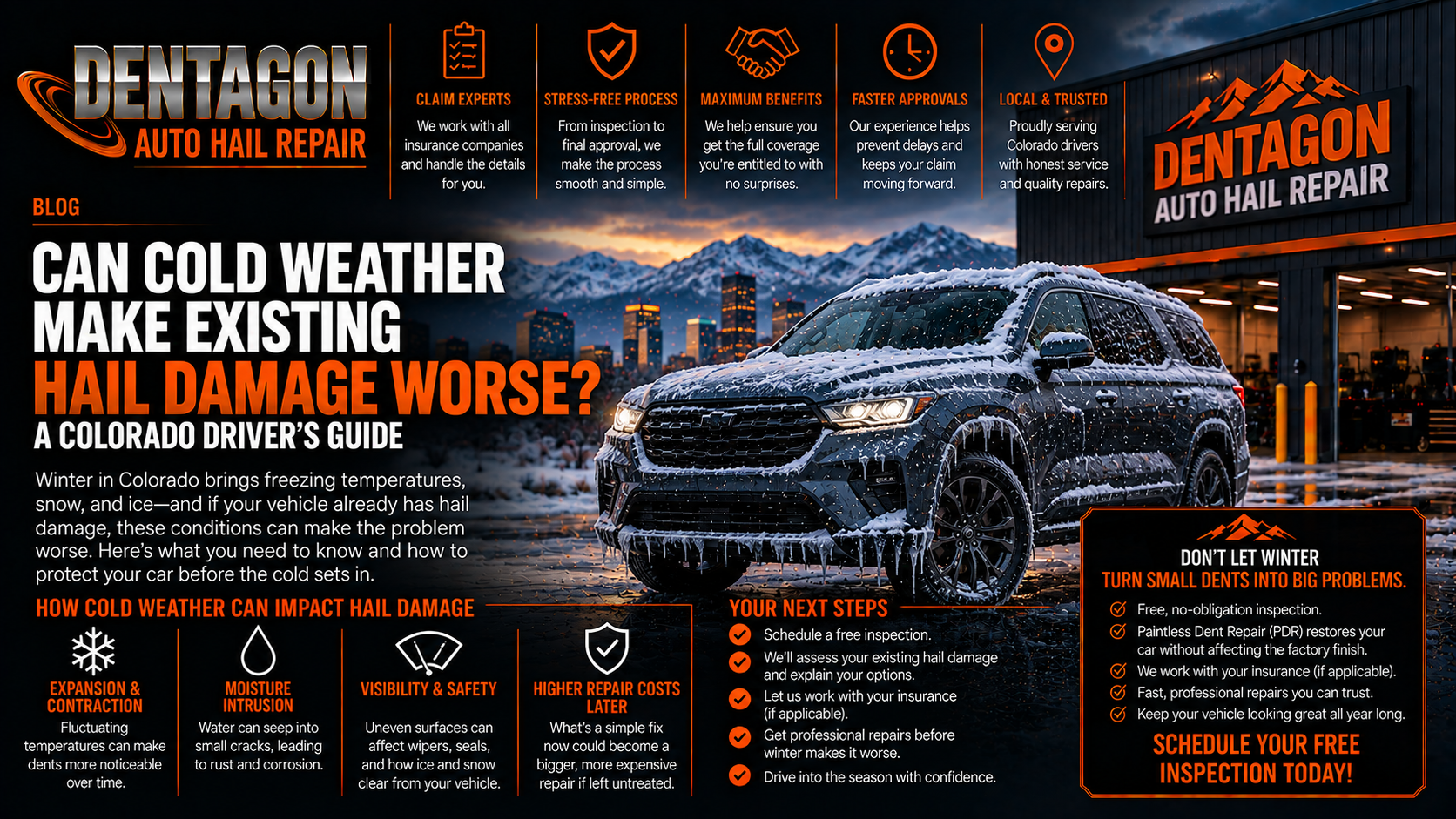
Can Winter Weather Affect Existing Hail Damage?
Winter doesn’t automatically turn every hail dent into a serious problem.
However, Colorado winter exposes vehicles to conditions including:
• Snow
• Ice
• Moisture
• Road grime
• Deicing chemicals
• Repeated freezing and thawing
• Temperature fluctuations
If the factory paint remains intact, these conditions may not create an immediate problem with the hail dents themselves.
If the paint has been chipped or cracked, however, exposed metal deserves attention.
The important thing is knowing which situation applies to your vehicle.
Don’t assume every dent is harmless.
And don’t assume every hail-damaged vehicle requires conventional body repair.
Have the damage inspected.
Why Fall Is a Good Time to Inspect Summer Hail Damage
Colorado hailstorms are especially common during the warmer months, and repair facilities can become extremely busy after a major storm.
By fall, the storm that damaged your vehicle may feel like old news.
But the damage is still there.
Getting the vehicle inspected before winter gives you an opportunity to:
• Document the existing hail damage
• Identify damaged panels
• Check the condition of the factory paint
• Determine whether Paintless Dent Repair may be appropriate
• Review your insurance estimate if you’ve already filed a claim
• Understand your repair options
• Address questions about your deductible
• Plan repairs before winter weather becomes more frequent
You don’t have to guess based on what you can see in your driveway.
Professional PDR lighting can make hail dents much easier to identify.
Can Hail Damage Be Worse Than It Looks?
Absolutely.
One of the challenges with automotive hail damage is that dents aren’t always easy to see under ordinary lighting.
A vehicle may look relatively normal from several feet away but reveal significantly more damage when inspected under specialized PDR lighting.
Hail damage may be present on:
• Hood
• Roof
• Trunk or liftgate
• Doors
• Fenders
• Quarter panels
• Roof rails
• Other exterior panels
Some dents may only become visible when light reflects across the panel at a particular angle.
That’s one reason an insurance estimate or casual visual inspection may not always reveal the complete extent of the damage.
A professional hail inspection gives you a much clearer picture of the vehicle’s condition.
What Is Paintless Dent Repair?
Paintless Dent Repair, commonly called PDR, is a specialized method used to repair many types of automotive dents without conventional bodywork and repainting.
When the damage qualifies for PDR, trained technicians use specialized tools and techniques to carefully reshape the affected metal while preserving the original factory finish.
Unlike conventional repair, PDR generally does not require:
• Sanding
• Body filler
• Primer
• Repainting
• Paint blending
• Clear-coat refinishing
For qualifying hail damage, this can be an excellent way to restore the vehicle while maintaining its original factory paint.
Can Paintless Dent Repair Fix Severe Hail Damage?
The number of dents alone doesn’t determine whether a vehicle qualifies for PDR.
A vehicle may have dozens or even hundreds of hail dents and still be a candidate for Paintless Dent Repair.
Technicians consider factors such as:
• Dent depth
• Dent diameter
• Location of the damage
• Panel material
• Accessibility behind the panel
• Condition of the paint
• Previous body repairs
• Sharpness of the impact
If the paint is intact and the metal can be properly manipulated, PDR may be possible even when the vehicle has extensive hail damage.
The best way to know is to have the vehicle inspected.
What If the Paint Was Damaged by the Hail?
Paint condition is important when determining the appropriate repair method.
Paintless Dent Repair is designed to preserve existing factory paint, so chipped, cracked, or severely damaged paint may require a different repair approach.
That doesn’t necessarily mean the entire vehicle needs conventional repair.
Some panels may qualify for PDR while another damaged area requires a different repair procedure.
Each vehicle needs to be evaluated individually.
If you’re unsure whether the paint was damaged, Dentagon can inspect the vehicle and explain what repair options may be appropriate.
Does Insurance Cover Hail Damage?
Hail damage is commonly covered under comprehensive auto insurance, subject to the specific policy’s deductible, exclusions, limits, and other terms.
Comprehensive coverage typically applies to vehicle damage caused by events other than a collision, which can include hail.
However, every insurance policy is different.
Review your policy or contact your insurance company if you’re unsure whether you had comprehensive coverage when the hail damage occurred.
Dentagon can also assist with the repair-related portion of qualifying hail damage insurance claims.
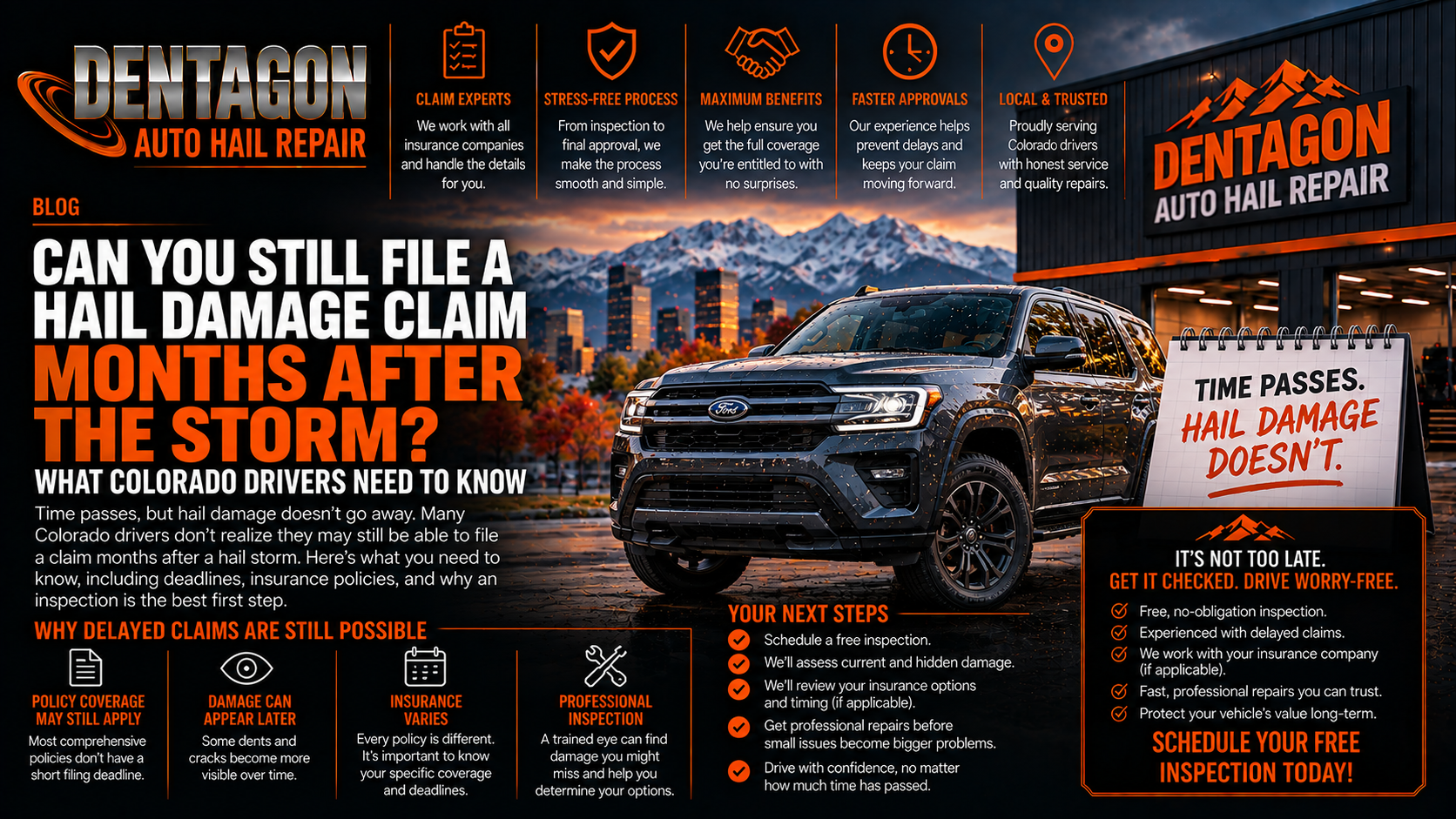
What If the Hailstorm Happened Months Ago?
Don’t automatically assume you’ve waited too long.
Insurance policies, reporting requirements, and claim circumstances can vary.
If your vehicle was damaged by a hailstorm several months ago and you haven’t filed a claim, review your policy and contact your insurance carrier to determine what requirements apply to your specific situation.
Be accurate about when and where the damage occurred.
If you don’t remember the exact date, don’t invent one.
Your insurance company can explain the requirements associated with your policy and claim.
You can also have the vehicle professionally inspected so you understand the extent of the damage before deciding what to do next.
What If I Already Filed an Insurance Claim?
If you’ve already filed a claim, received an estimate, or received an insurance payment, bring the documentation with you when you have the vehicle inspected.
An initial insurance estimate isn’t necessarily the final repair plan.
Hail dents can be difficult to identify without specialized lighting, and additional covered damage or necessary repair procedures may sometimes be discovered after the repair facility performs a more detailed inspection.
When appropriate, the repair facility may submit supplemental documentation to the insurance company for review.
Dentagon can help with:
• Reviewing insurance estimates
• Documenting hail damage
• Communicating with insurance adjusters
• Supplemental estimates when additional covered damage is identified
• Repair documentation
• Explaining the repair process
Learn more about our Insurance Claims Assistance program.
Will Filing a Hail Claim Raise My Insurance Rates?
There isn’t a universal answer that applies to every driver or insurance company.
Hail claims are generally comprehensive claims rather than at-fault collision claims, but insurance pricing depends on numerous factors, including the insurer, policy, location, claims history, and broader regional risk.
Your repair shop doesn’t determine your insurance premium.
If you’re concerned about how a claim could affect your policy or premium, ask your insurance carrier directly.
What you shouldn’t do is assume that you’re better off leaving significant hail damage unrepaired without first understanding your coverage and repair options.
What About My Insurance Deductible?
Your comprehensive deductible is the amount specified by your insurance policy that you’re generally responsible for on a covered comprehensive claim.
For some vehicle owners, the deductible is one of the biggest reasons they postpone hail repairs.
Dentagon offers Deductible Assistance for qualifying repairs.
Eligibility can depend on the repair and claim, so don’t assume that every vehicle or insurance claim automatically qualifies.
Ask the Dentagon team about available deductible assistance when you schedule your inspection.
Can I Just Wait Until Next Hail Season?
You can choose when to repair your vehicle, but waiting for another storm can create additional complications.
If a vehicle with existing unrepaired hail damage is hit by another hailstorm, there may now be damage from two separate events.
That can make documentation more complicated.
Separate storms may also represent separate loss events for insurance purposes.
If you already know your vehicle has hail damage, documenting and inspecting it now gives you a clearer understanding of its current condition.
What If My Vehicle Gets Hailed on Again After It’s Repaired?
Colorado weather is unpredictable.
Repairing hail damage today obviously can’t prevent another storm from occurring in the future.
However, restoring your vehicle means you’re not entering the next hail season with pre-existing unrepaired damage.
If another hailstorm damages the vehicle later, having previous damage properly repaired and documented can make it easier to distinguish the new loss from old damage.
Keep copies of your repair documentation after the work is completed.
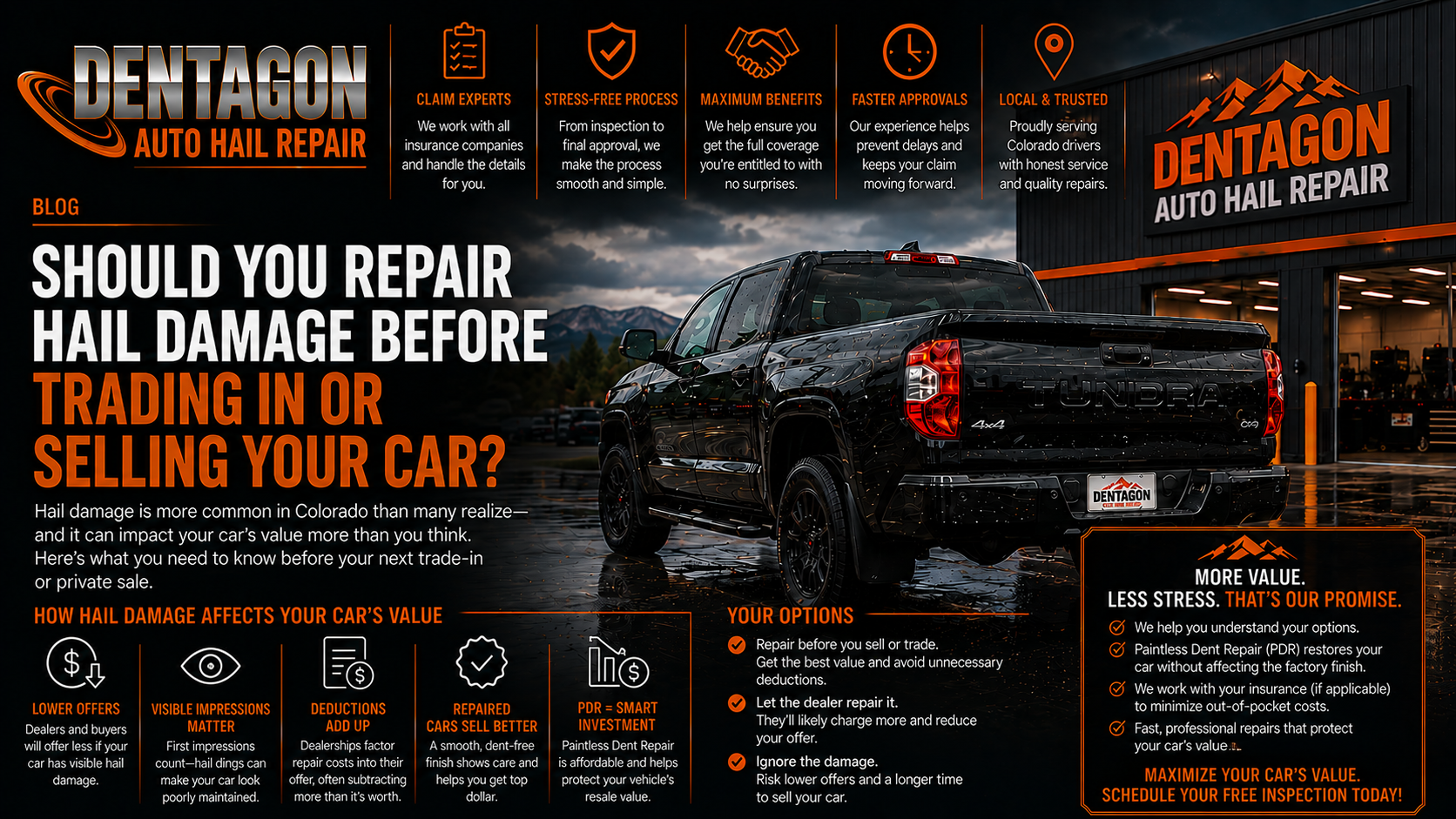
Does Unrepaired Hail Damage Affect Vehicle Value?
It can.
Even when hail damage is entirely cosmetic, exterior condition can affect how buyers and dealerships evaluate a vehicle.
Imagine two otherwise similar vehicles with comparable mileage, equipment, and mechanical condition.
One has a clean exterior.
The other has dozens of visible dents across the hood and roof.
A prospective buyer or dealership may value those vehicles differently because repairing the damaged vehicle represents an additional cost or inconvenience.
If you think you may sell or trade your vehicle in the future, repairing qualifying hail damage may be worth considering.
What If I’m Planning to Trade or Sell the Vehicle This Winter?
Get the hail damage inspected before you start negotiating.
Knowing the extent of the damage gives you more information when deciding whether to:
• Repair the vehicle first
• Trade it with existing damage
• Sell it privately as-is
• Use applicable insurance coverage
• Keep the vehicle and repair it later
Don’t wait until a dealership reduces your trade-in offer because of hail damage to find out what repairing the vehicle might involve.
A free inspection allows you to compare your options before making that decision.
Should I Repair Hail Damage on a Leased Vehicle Before Winter?
If your vehicle is leased, review your lease agreement and vehicle-return requirements.
Hail damage may potentially be considered beyond normal wear and tear when the vehicle is returned.
The exact requirements depend on the leasing company and your agreement.
If your lease ends this winter or early next year, fall is a good time to have existing hail damage inspected.
That gives you time to understand the damage, determine whether insurance coverage applies, and evaluate your repair options before the lease-end inspection.
How Long Does Hail Damage Repair Take?
Repair time depends on the vehicle and extent of the damage.
Factors can include:
• Number of damaged panels
• Number and severity of dents
• Panel accessibility
• Parts that need to be removed and reinstalled
• Whether replacement parts are required
• Insurance approval and supplements
• Parts availability
• Current repair-shop workload
A vehicle with relatively minor hail damage may require a very different repair process than one with hundreds of dents across multiple panels.
After inspecting the vehicle, Dentagon can provide a better understanding of the anticipated repair process for your specific vehicle.
Don’t Wait for the First Snowstorm to Think About Your Vehicle
Colorado weather can change quickly.
Once winter arrives, drivers start thinking about tires, batteries, windshield washer fluid, snow brushes, and winter maintenance.
Hail damage from several months earlier becomes even easier to ignore.
If you know your vehicle was damaged this spring or summer, fall is an ideal opportunity to finally get it inspected.
An inspection doesn’t obligate you to repair the vehicle.
It simply gives you the information you need to make an informed decision.
Why Choose Dentagon for Hail Damage Repair?
Dentagon Auto Hail Repair specializes in automotive hail damage and Paintless Dent Repair.
We’ll inspect your vehicle, explain what we find, and help you understand the available repair options.
Drivers choose Dentagon for:
✓ Free Hail Damage Inspections
✓ Paintless Dent Repair Specialists
✓ Insurance Claims Assistance
✓ Deductible Assistance for Qualifying Repairs
✓ Lifetime Warranty
✓ Honest Recommendations
✓ Exceptional Customer Service
Our goal isn’t to tell every customer that every dent must immediately be repaired.
It’s to help you understand your vehicle’s condition and available options so you can decide what makes sense for your situation.
Serving Denver and Surrounding Communities
Dentagon provides professional hail damage inspections and Paintless Dent Repair throughout the Denver metro area, including:
• Arvada
• Aurora
• Brighton
• Broomfield
• Castle Rock
• Centennial
• Denver
• Englewood
• Highlands Ranch
• Lakewood
• Littleton
• Parker
• Westminster
Whether your vehicle was damaged by a recent storm or you’ve been putting off repairs since earlier this hail season, our team can inspect the damage and help you determine the next step.
Schedule a Free Hail Damage Inspection Before Winter
If your vehicle still has hail damage from this spring or summer, don’t head into another Colorado season without knowing the condition of your vehicle.
Dentagon Auto Hail Repair can inspect the damage, determine whether Paintless Dent Repair is appropriate, review your repair options, and assist with the repair-related insurance process when applicable.
There’s no need to guess whether the damage is serious, whether your vehicle qualifies for PDR, or what repairing it may involve.
Start with an inspection.
Schedule your FREE hail damage inspection today.