

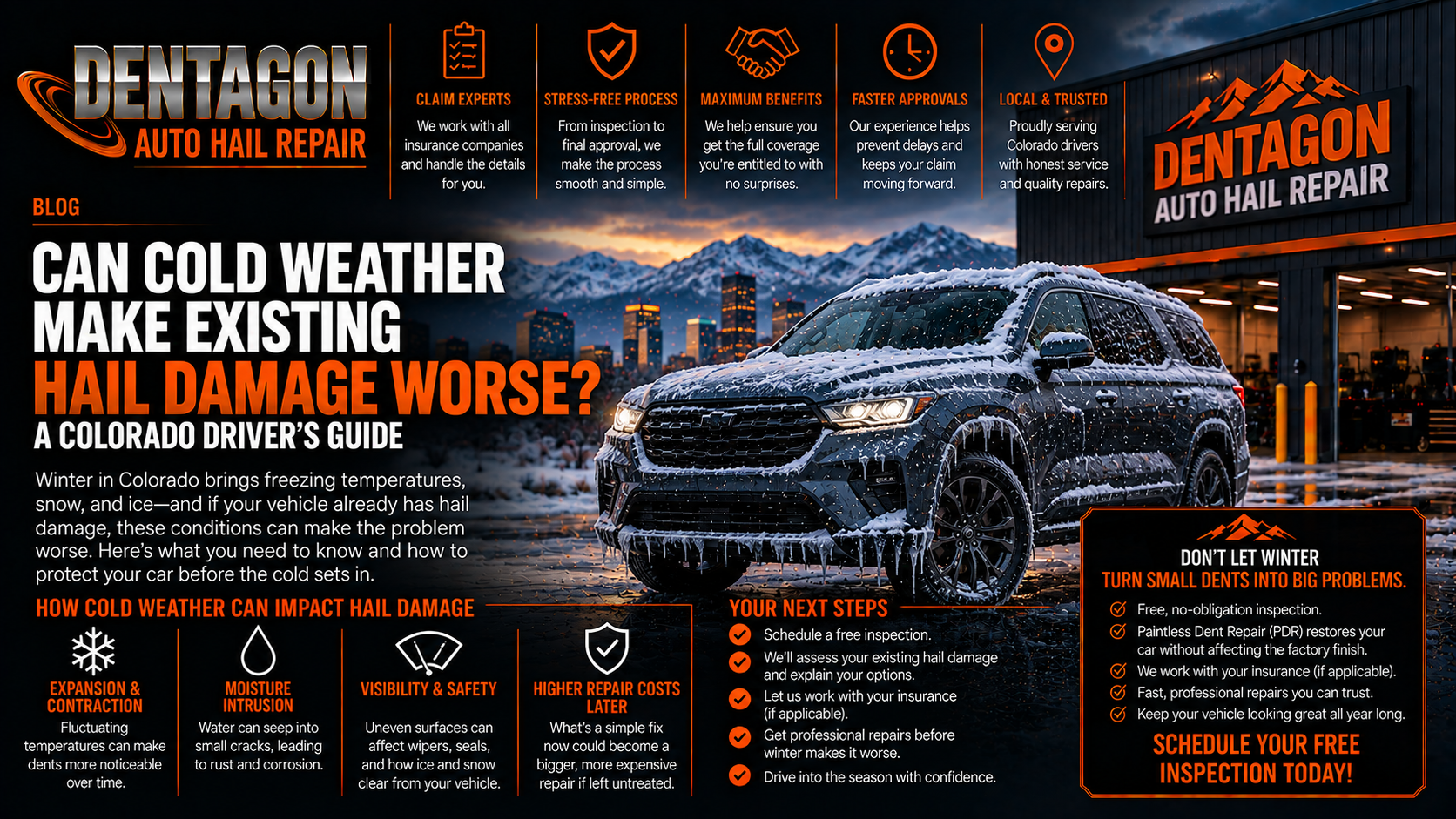
Can Cold Weather Make Existing Hail Damage Worse? A Colorado Driver’s Guide
What Happens to Hail Damage When Colorado Temperatures Drop?
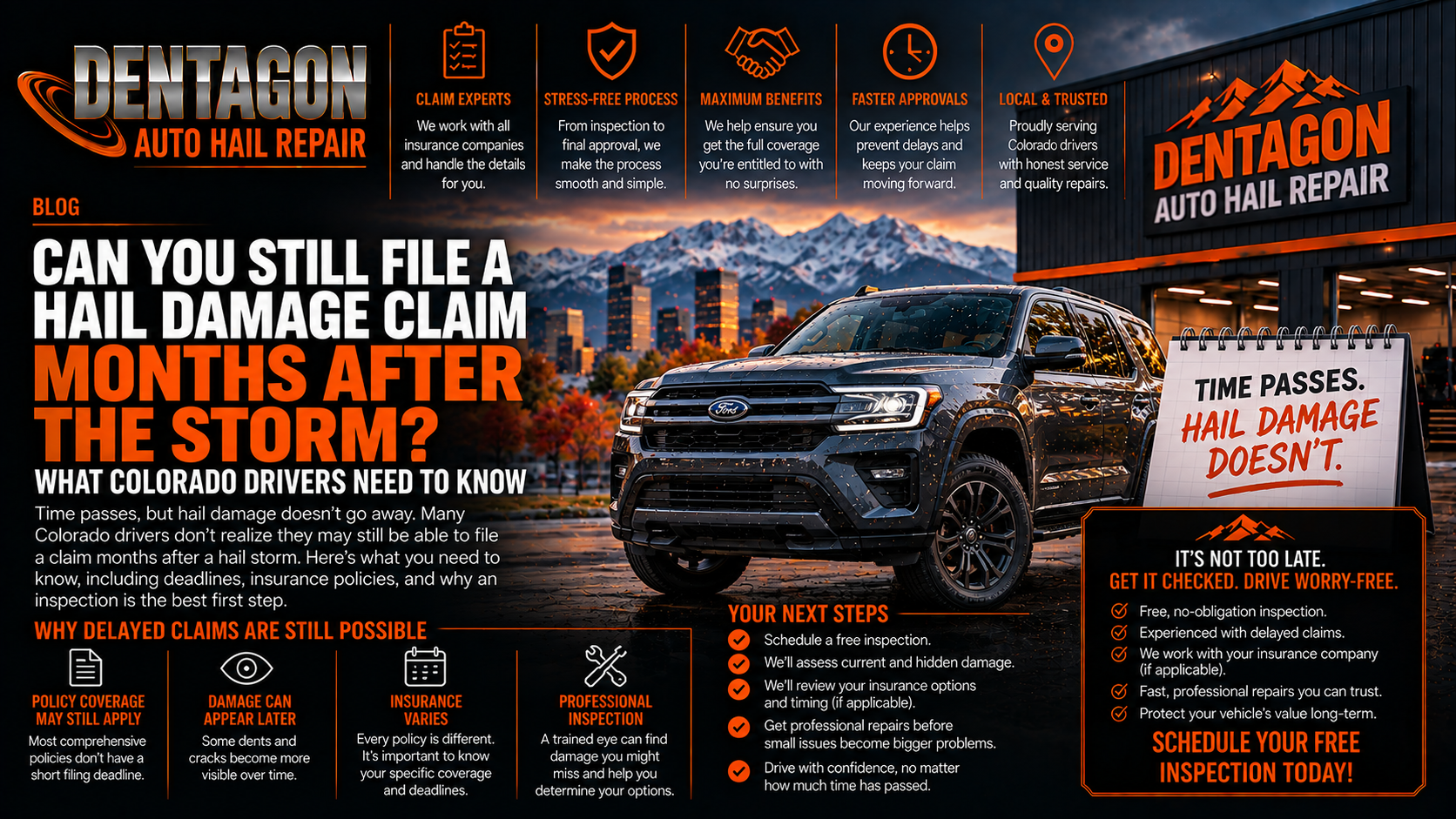
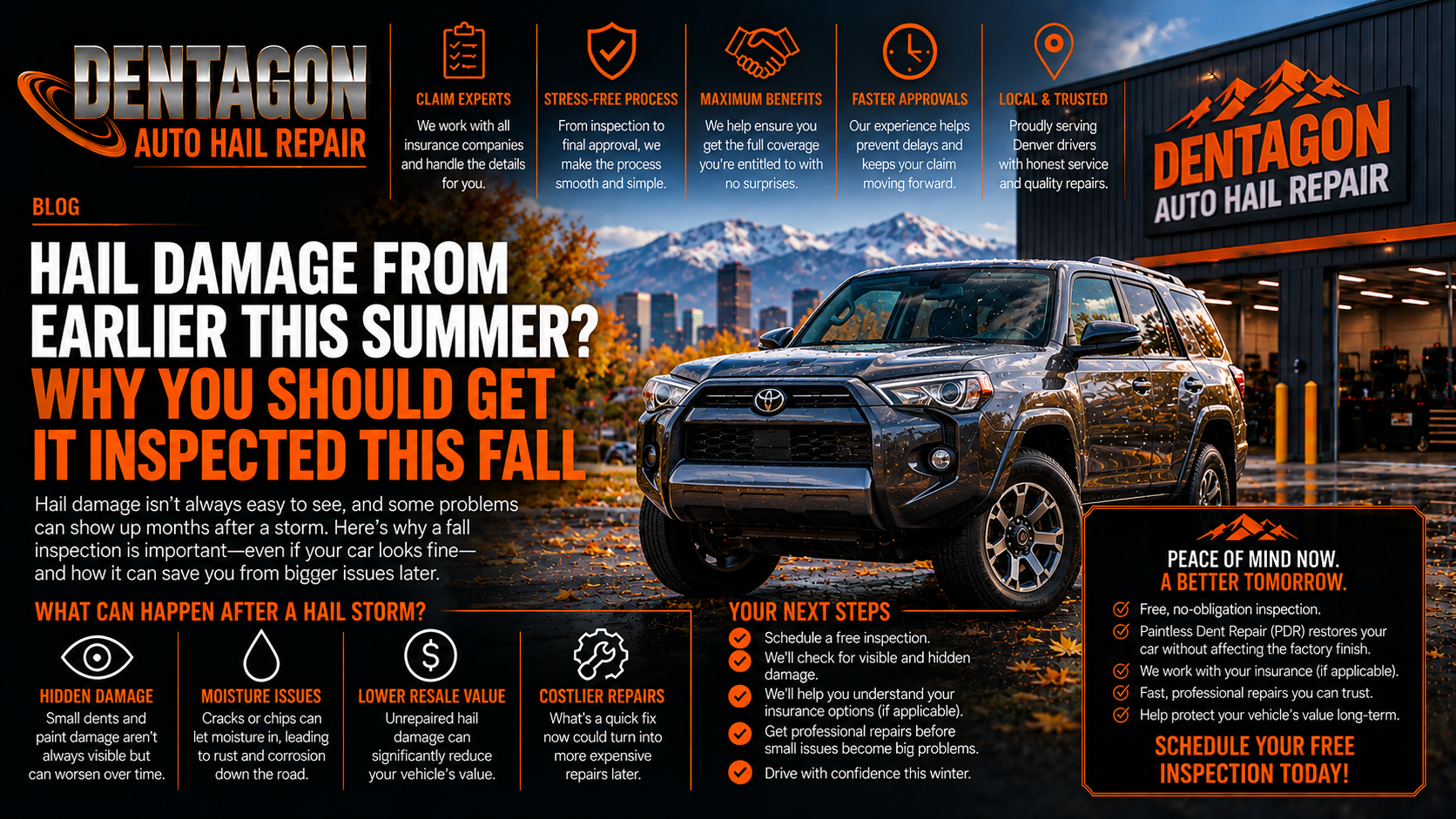
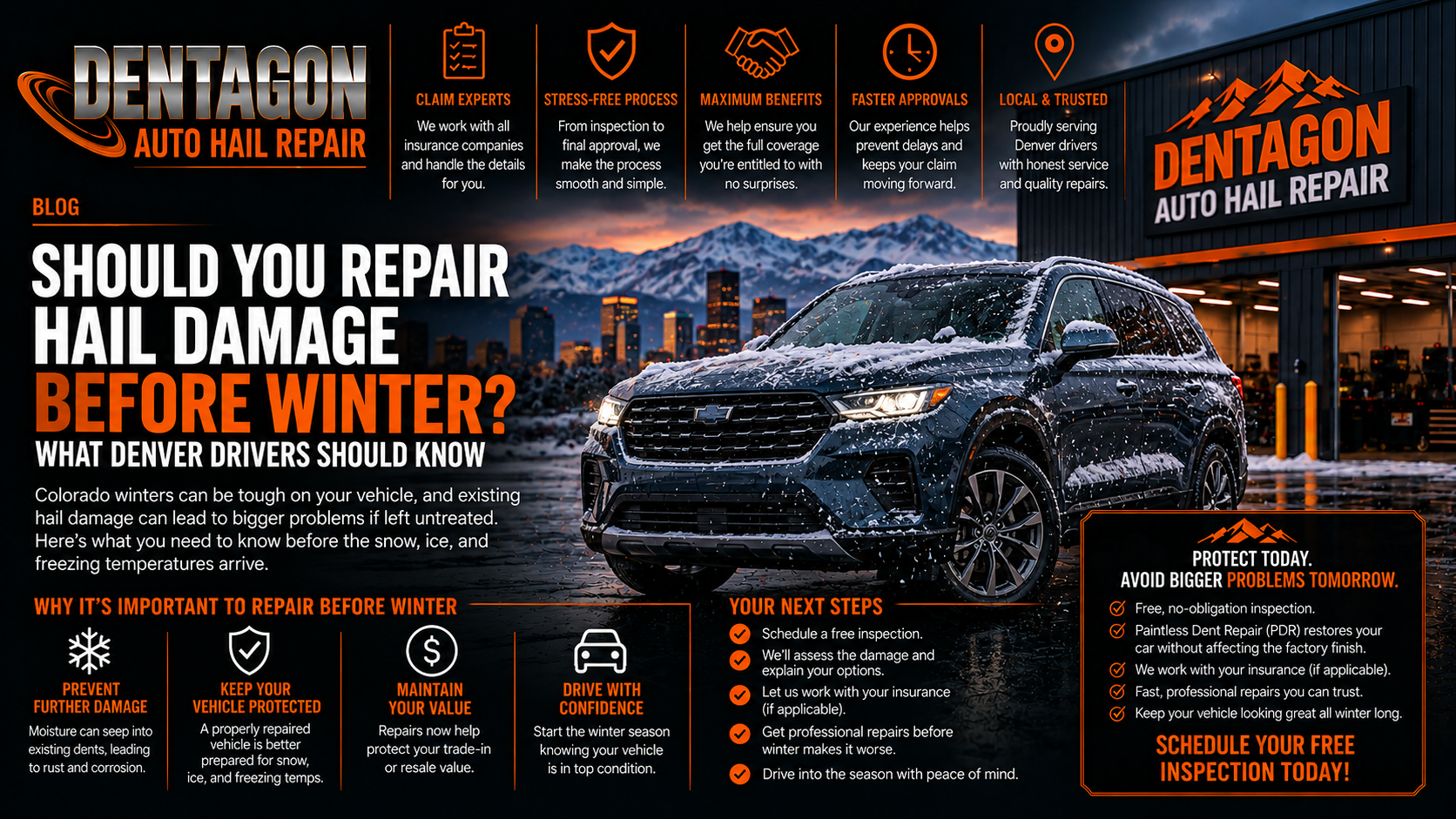
If your vehicle was damaged by hail this spring or summer and the dents are still there as winter approaches, you may be wondering whether cold weather can make the damage worse.
It’s a reasonable question—especially in Colorado, where temperatures can change dramatically and vehicles are regularly exposed to snow, ice, moisture, road grime, and deicing chemicals throughout the winter.
The answer depends largely on the type of hail damage your vehicle has.
A shallow hail dent with completely intact factory paint is different from an impact that chipped, cracked, or otherwise compromised the paint.
Cold weather doesn’t automatically cause ordinary hail dents to suddenly become larger or more severe.
However, if hail damaged the protective finish and exposed the metal underneath, winter conditions can become a greater concern.
The problem is that you may not know which type of damage you have simply by looking at your vehicle in the driveway.
Dentagon Auto Hail Repair offers FREE hail damage inspections for drivers throughout Denver and the surrounding metro area.
Does Cold Weather Make Hail Dents Bigger?
Not necessarily.
Automotive body panels naturally expand and contract slightly as temperatures change, but normal Colorado winter temperatures don’t mean every existing hail dent will suddenly grow.
If the metal was dented by hail but the factory paint remains intact, the damage may remain primarily cosmetic.
That doesn’t mean the dent will repair itself either.
Cold temperatures aren’t a substitute for professional dent repair.
The more important concern is whether the hail impact damaged the paint or protective finish.
Can Freezing Temperatures Crack Paint Around a Hail Dent?
The condition of the paint matters.
A hail impact can sometimes stretch, chip, crack, or otherwise damage the finish.
If the paint was already compromised during the original impact, repeated exposure to temperature changes, moisture, snow, ice, and normal winter driving conditions may create additional concerns around that damaged area.
That doesn’t mean every dent will develop cracked paint during winter.
Many hail dents retain completely intact factory paint and may be excellent candidates for Paintless Dent Repair.
A professional inspection can help determine which situation applies to your vehicle.
Why Is Damaged Paint More Concerning Before Winter?
Automotive paint isn’t just decorative.
Your vehicle’s paint and clear coat help protect the underlying body panels from the environment.
When the protective finish remains intact, the metal underneath is shielded from direct exposure to moisture and other contaminants.
When paint is chipped deeply enough to expose metal, that protection may be compromised.
Winter can expose your vehicle to:
• Snow
• Ice
• Water
• Road grime
• Deicing chemicals
• Repeated freeze-and-thaw cycles
• Significant temperature changes
Exposed metal and moisture are not a combination you want to ignore indefinitely.
That’s why identifying paint damage can be more important than simply counting dents.
Can Hail Damage Cause Rust?
A dent alone doesn’t automatically cause rust.
If the factory paint remains intact, the metal underneath may still be protected.
The concern increases when the impact has chipped or cracked the finish and exposed bare metal.
Once exposed, metal may become vulnerable to corrosion when moisture and environmental contaminants reach the area.
How quickly corrosion develops depends on numerous factors, including:
• Extent of paint damage
• Amount of exposed metal
• Moisture exposure
• Road conditions
• Deicing chemicals
• Vehicle storage
• Location of the damage
• Existing corrosion
The important distinction is between a dent with intact paint and a dent where the protective finish has been compromised.
What About Road Salt and Deicing Chemicals?
Colorado roads may be treated with various deicing products during winter weather.
Those materials can accumulate on vehicles along with water, dirt, slush, and road grime.
Your vehicle’s factory finish helps protect the underlying metal from these environmental conditions.
If hail damage has compromised that protective finish, exposed areas deserve attention.
Regular winter vehicle washing can help remove accumulated road contaminants, particularly around wheel wells, lower body panels, and other areas where grime collects.
But washing the vehicle doesn’t repair existing hail dents or restore damaged paint.
If you’re concerned that hail chipped or cracked the finish, have the vehicle inspected.
Can Snow and Ice Make Hail Damage Worse?
Snow sitting on an otherwise intact hail dent doesn’t automatically make the dent worse.
Likewise, ordinary ice accumulation doesn’t mean existing hail dents will suddenly multiply.
The larger issue is moisture exposure when the paint has already been damaged.
Snow melts.
Water reaches the vehicle’s exterior.
Temperatures fall again.
That cycle can happen repeatedly throughout a Colorado winter.
If the paint remains intact, that’s very different from moisture repeatedly reaching exposed metal.
Rather than assuming winter will—or won’t—cause a problem, determine the condition of the damaged panels.
Does Hail Damage Become Harder to Repair When It’s Cold?
The outside temperature on a particular day isn’t what determines whether your vehicle qualifies for Paintless Dent Repair.
Professional hail repairs are performed in a controlled repair environment using specialized tools, lighting, and techniques.
Technicians evaluate factors such as:
• Dent depth
• Dent diameter
• Location of the damage
• Panel material
• Metal condition
• Paint condition
• Accessibility behind the panel
• Previous repairs
• Severity of the impact
A hail dent that occurred in June doesn’t automatically become impossible to repair because the calendar now says December.
If the damage qualifies for PDR, it may still be repairable months after the original storm.
Do Hail Dents Repair Themselves in Hot or Cold Weather?
Don’t count on it.
You may see online advice claiming that extreme temperature changes can make dents disappear.
Automotive metal does expand and contract with temperature changes, but that doesn’t mean normal summer heat or winter cold will reliably restore a hail-damaged panel to its original shape.
Professional Paintless Dent Repair involves carefully manipulating the damaged metal using specialized techniques.
Trying to rapidly heat or cool a vehicle panel yourself can also create unnecessary risks to the paint and finish.
If you want to know whether a dent can be repaired, have it professionally inspected.
What Is Paintless Dent Repair?
Paintless Dent Repair, commonly called PDR, is a specialized repair method used to restore many types of automotive dents while preserving the original factory paint whenever possible.
Instead of sanding the panel, applying body filler, and repainting it, trained technicians use specialized tools and techniques to carefully reshape the damaged metal.
PDR is commonly used for:
• Hail dents
• Door dings
• Minor dents
• Shallow creases
• Hood dents
• Roof dents
• Trunk dents
• Fender dents
• Quarter-panel dents
When hail damage qualifies for PDR, the vehicle may be restored without many of the procedures associated with conventional body repair.
Learn more about our Paintless Dent Repair services.
Why Is Paintless Dent Repair a Good Option for Hail Damage?
Hail frequently creates numerous dents without breaking the factory paint.
When the paint remains intact and the damage otherwise qualifies, PDR can allow technicians to restore the affected panels while preserving the original finish.
PDR generally avoids:
• Body filler
• Sanding
• Primer
• Repainting
• Paint blending
• Clear-coat refinishing
That eliminates paint-matching concerns on panels successfully repaired with PDR.
For qualifying hail damage, preserving the factory finish is one of the biggest advantages of Paintless Dent Repair.
What If Some Dents Have Paint Damage and Others Don’t?
Hail damage isn’t always identical across the entire vehicle.
One panel may contain dozens of shallow dents with completely intact paint.
Another panel may have received a sharper impact that chipped the finish.
That doesn’t automatically mean the entire vehicle requires conventional body repair.
The appropriate repair method can vary by panel and by damage.
A professional inspection can help determine:
• Which panels qualify for PDR
• Whether the factory paint remains intact
• Whether any areas have chipped or cracked paint
• Whether conventional repair may be required somewhere on the vehicle
• The overall extent of the hail damage
The repair plan should be based on the actual condition of the vehicle.
Can You Repair Hail Damage During the Winter?
Yes.
You don’t have to wait until spring simply because Colorado’s hail season has ended.
Paintless Dent Repair facilities perform repairs indoors in a controlled environment.
If your vehicle was damaged earlier in the year and you’ve been postponing the repair, winter doesn’t automatically prevent you from getting it fixed.
In fact, handling the damage during fall or winter can mean entering the next hail season without unrepaired damage from the previous year.
Why Does Repairing Old Damage Before Next Hail Season Matter?
Colorado vehicles can be hit by hail more than once.
If your vehicle already has unrepaired damage and another hailstorm occurs next spring or summer, distinguishing old damage from new damage may become more complicated.
Separate storms may represent separate loss events for insurance purposes.
That can potentially involve:
• Different dates of loss
• Separate insurance claims
• Separate damage documentation
• Different coverage circumstances
• Separate deductibles depending on the policy and claims
Repairing and documenting previous damage creates a clearer starting point if the vehicle is damaged again later.
What If I Already Filed an Insurance Claim?
If you filed a hail claim earlier this year but never completed the repair, fall or winter may be a good time to revisit it.
Gather your existing claim information, including:
• Insurance estimate
• Claim number
• Insurance correspondence
• Photographs
• Payment information, if applicable
Bring the documentation with you when the vehicle is inspected.
Dentagon can review the repair-related information and compare it with the damage identified during the professional inspection.
What If My Insurance Estimate Missed Some of the Damage?
Initial insurance estimates don’t always represent the final repair plan.
Hail dents can be difficult to see under ordinary lighting.
Once the vehicle is examined using specialized PDR lighting and repair procedures are evaluated, additional covered damage or necessary repair operations may sometimes be identified.
When appropriate, a repair facility may submit supplemental documentation to the insurance company for review.
Dentagon can help with:
• Reviewing insurance estimates
• Documenting hail damage
• Communicating with insurance adjusters
• Supplemental estimates when additional covered damage is identified
• Repair documentation
• Explaining the repair process
Learn more about our Insurance Claims Assistance program.
What If I Haven’t Filed an Insurance Claim Yet?
Don’t automatically assume it’s too late simply because the hailstorm happened several months ago.
At the same time, don’t assume you have an unlimited amount of time to report the damage.
Insurance policies can contain different reporting requirements and other terms.
If you believe your vehicle was damaged during an earlier Colorado hailstorm:
• Review your policy
• Identify the approximate storm date
• Determine where the vehicle was located
• Photograph the damage
• Contact your insurance carrier
• Ask what requirements apply to your policy
Be accurate about when and how the damage occurred.
Your insurance company determines whether coverage applies.
What About My Comprehensive Deductible?
Hail damage is commonly covered under comprehensive auto insurance, subject to the policy’s deductible, exclusions, limits, and other terms.
Your comprehensive deductible is the amount specified by your policy that you’re generally responsible for on a covered comprehensive claim.
Dentagon offers Deductible Assistance for qualifying repairs.
Eligibility depends on the repair and claim circumstances, so not every vehicle or insurance claim automatically qualifies.
Ask our team about available deductible assistance when scheduling your free inspection.
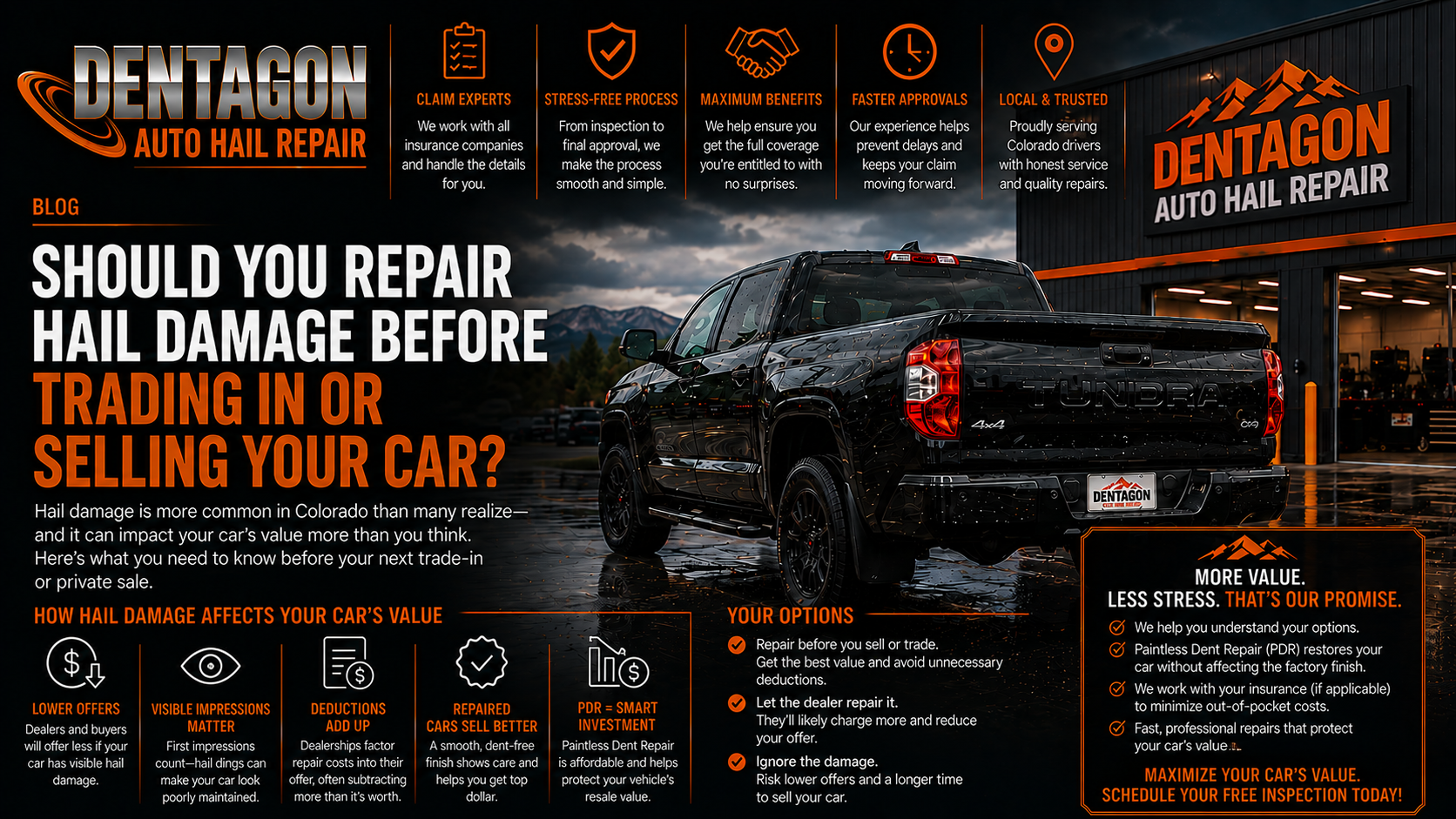
Can Unrepaired Hail Damage Affect My Vehicle’s Value?
Potentially.
Even when hail damage is cosmetic, exterior condition can affect how a dealership or private buyer evaluates a vehicle.
A vehicle with dozens of visible dents may be viewed differently from an otherwise comparable vehicle with a clean exterior.
A dealership may account for anticipated repair costs when determining a trade-in offer.
A private buyer may expect a lower price because they’re taking responsibility for the existing damage.
If you’re considering selling or trading your vehicle this winter or next spring, having the damage inspected before you begin negotiating can help you understand your options.
What If My Vehicle Is Leased?
If you’re driving a leased vehicle with unrepaired hail damage, review your lease agreement and return-condition requirements.
Hail damage may potentially be considered beyond normal wear and tear.
The exact standards depend on your leasing company and agreement.
If your lease ends during the winter or early spring, don’t wait until the return inspection to discover how extensive the hail damage actually is.
Having it professionally inspected gives you more time to determine whether insurance coverage applies and what repair options are available.
Should I Wait Until Spring to Get the Damage Inspected?
There’s generally no advantage to waiting simply because it’s winter.
A professional inspection can help you understand:
• How much hail damage exists
• Which panels are affected
• Whether the factory paint is intact
• Whether any paint has been compromised
• Whether Paintless Dent Repair is appropriate
• Whether an existing insurance estimate reflects the damage
• What your repair options are
And an inspection doesn’t obligate you to repair the vehicle.
It gives you information.
If the vehicle turns out to have minor cosmetic damage with completely intact paint, you’ll know.
If there are areas where the finish has been compromised, you’ll know that too.
Why Get Your Vehicle Inspected Before Colorado Winter?
The goal isn’t to scare drivers into believing every hail dent becomes dramatically worse when temperatures drop.
That’s simply not accurate.
The better reason to get the vehicle inspected is to stop guessing.
If the hail damage is cosmetic and the paint remains intact, you can make your decision with that information.
If the paint has been compromised, you can address the issue before another season of moisture, snow, road grime, and winter driving.
And if the vehicle qualifies for Paintless Dent Repair, you can determine whether repairing it now makes sense.
Why Choose Dentagon for Hail Damage Repair?
Dentagon Auto Hail Repair specializes in automotive hail damage and Paintless Dent Repair.
We’ll inspect your vehicle, explain the condition of the damaged panels, and help you understand your repair options.
Drivers choose Dentagon for:
✓ Free Hail Damage Inspections
✓ Paintless Dent Repair Specialists
✓ Insurance Claims Assistance
✓ Deductible Assistance for Qualifying Repairs
✓ Lifetime Warranty
✓ Honest Recommendations
✓ Exceptional Customer Service
Our goal isn’t to exaggerate what winter will do to your vehicle.
It’s to accurately identify the damage and give you the information you need to make an informed decision about repairing it.
Serving Denver and Surrounding Communities
Dentagon provides professional hail damage inspections and Paintless Dent Repair throughout the Denver metro area, including:
• Arvada
• Aurora
• Brighton
• Broomfield
• Castle Rock
• Centennial
• Denver
• Englewood
• Highlands Ranch
• Lakewood
• Littleton
• Parker
• Westminster
Whether your vehicle was damaged by hail last week or several months ago, our team can inspect the damage and help you understand your repair options.
Schedule a Free Hail Damage Inspection Before Winter
If you’re heading into another Colorado winter with unrepaired hail damage, you don’t have to guess about the condition of your vehicle.
Have it inspected.
Dentagon Auto Hail Repair can determine the extent of the damage, check whether the factory paint remains intact, determine whether Paintless Dent Repair is appropriate, review existing insurance repair documentation, and assist with the repair-related insurance process when applicable.
The inspection is free, and you’ll know exactly what you’re dealing with before winter weather arrives.
Schedule your FREE hail damage inspection today.