

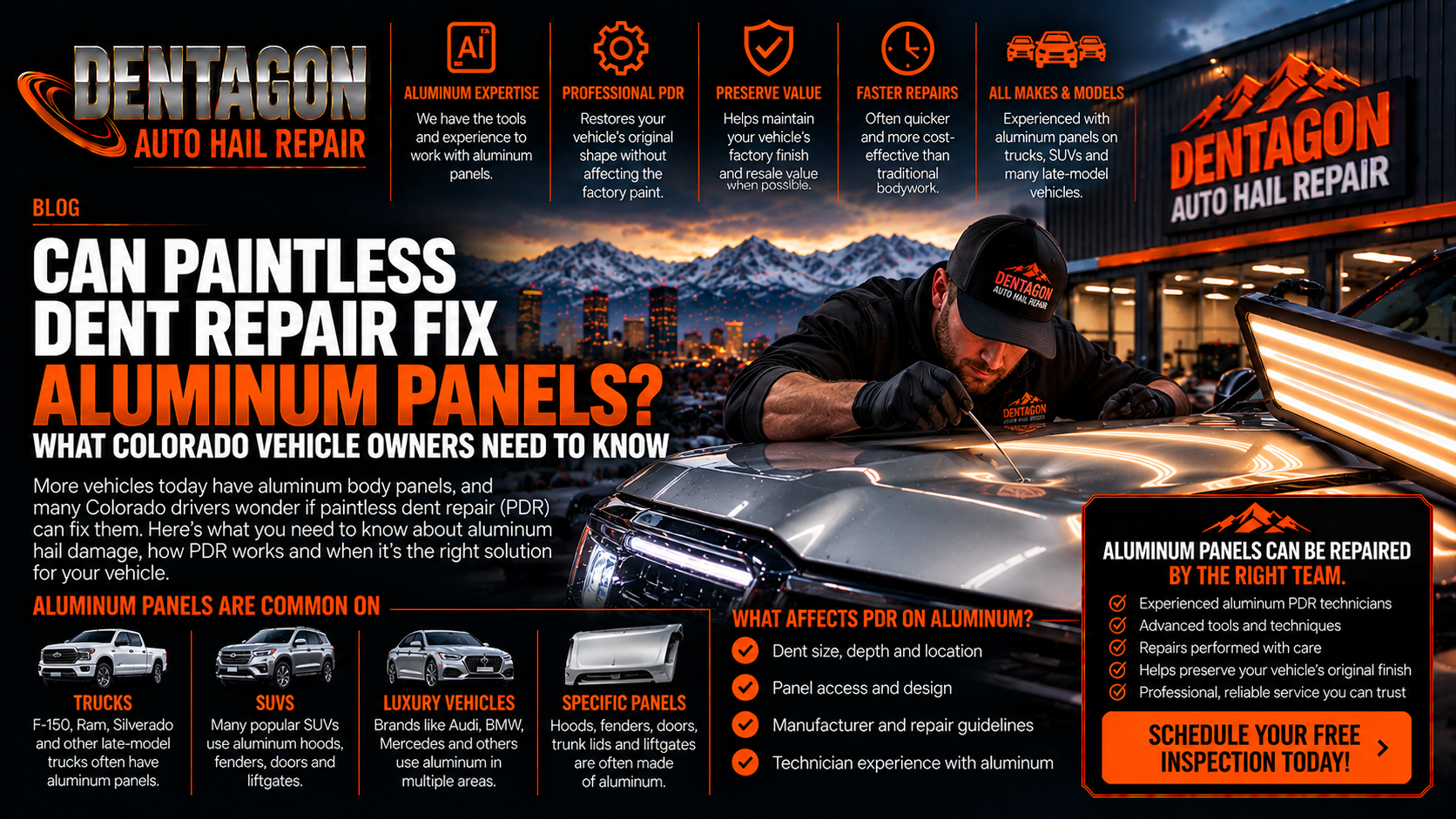
Can Paintless Dent Repair Fix Aluminum Panels? What Colorado Vehicle Owners Need to Know
Your vehicle has a dent in the hood, door, or fender. The paint looks fine, and you’ve heard that Paintless Dent Repair can remove dents without repainting. But there’s one important detail you might not have considered: your vehicle’s damaged panel could be made of aluminum instead of steel.
Does that mean Paintless Dent Repair won’t work?
Not at all. Paintless Dent Repair can successfully repair many aluminum panels, but aluminum behaves differently from steel, making the repair process more challenging.
As automakers increasingly use aluminum to reduce vehicle weight and improve efficiency, understanding how aluminum responds to dent repair has become more important than ever.
At Dentagon, we specialize in Paintless Dent Repair (PDR) and automotive hail damage repair throughout the Denver metro area. Whether you’re dealing with a parking lot door ding or dozens of hail dents, understanding the material beneath your vehicle’s paint can help you make better decisions about repairs.
Can Paintless Dent Repair Be Done on Aluminum?
Yes. Paintless Dent Repair can be performed on aluminum body panels when the damage is suitable and the metal can be safely reshaped without compromising the paint finish.
PDR is a specialized technique that removes dents by carefully manipulating the metal back toward its original shape.
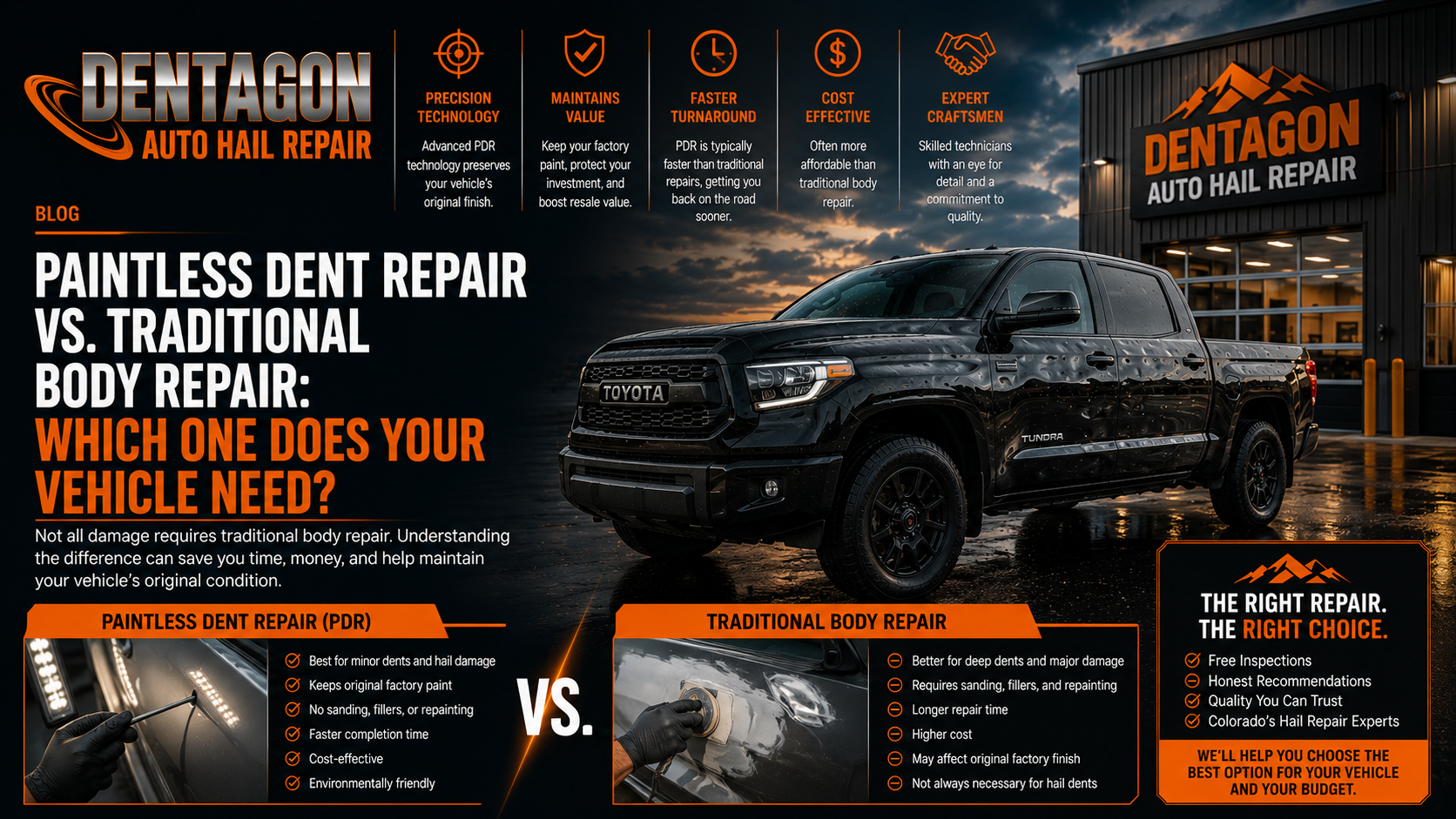
Unlike traditional body repair, which may involve sanding, body filler, and repainting, PDR aims to restore the damaged panel while preserving its existing finish.
The technique works on both steel and aluminum, but the repair process isn’t identical.
Aluminum has different mechanical properties, and its response to bending and reshaping can make certain dents more difficult to repair.
Why Aluminum Dent Repair Requires Specialized Skill
When a vehicle panel is dented, the metal changes shape under pressure.
A trained PDR technician evaluates the dent’s depth, location, surrounding tension, and the condition of the paint before beginning repairs.
With aluminum, technicians must account for the material’s particular behavior during deformation and correction.
Some aluminum alloys are less forgiving during repeated reshaping, and excessive force can increase the risk of metal fatigue or damage.
Successful aluminum PDR requires controlled pressure, careful technique, and a thorough understanding of how the specific panel responds.
Aluminum vs. Steel: What’s the Difference for Dent Repair?
Most drivers never think about whether their vehicle’s hood or doors are made from steel or aluminum.
However, that distinction can influence repair difficulty, technique, and cost.
Both materials can be repaired using PDR, but their physical properties affect how technicians approach the work.
Steel Panels
Steel has traditionally been the most common material used in automotive body panels.
Depending on the grade and construction, steel panels can offer a relatively predictable response to controlled dent correction.
When the paint remains intact and the damage is accessible, many steel dents are excellent candidates for Paintless Dent Repair.
Aluminum Panels
Aluminum is widely used in modern automotive manufacturing because it offers strength while weighing less than steel.
However, aluminum doesn’t respond to dent correction exactly like steel.
Its behavior varies by alloy, thickness, temper, and panel design.
Some aluminum panels require more precise pressure and additional time to restore their original contours.
How the Materials Compare
| Repair Factor | Steel Panels | Aluminum Panels |
|---|---|---|
| PDR compatibility | Often suitable | Often suitable |
| Repair difficulty | Varies by dent | Can be more challenging |
| Metal response | Depends on steel grade | Depends on aluminum alloy and temper |
| Specialized technique | Required | Required, often with additional considerations |
| Factory paint preservation | Possible | Possible |
| Repair cost | Depends on damage | May be higher for comparable damage |
The important takeaway is that aluminum doesn’t automatically require replacement or conventional body repair.
A qualified PDR technician can determine whether the damage can be corrected without repainting.
Why Is Aluminum Harder to Repair Than Steel?
Aluminum dent repair can be more challenging for several reasons.
Understanding these differences helps explain why two similar-looking dents may require different amounts of labor.
1. Aluminum Responds Differently to Pressure
When technicians repair dents using PDR, they apply carefully controlled pressure to reshape the metal.
The amount of force required depends on the panel’s material, thickness, shape, and the characteristics of the dent.
Aluminum panels may respond differently from comparable steel panels, requiring technicians to adjust their technique.
Using excessive pressure can create high spots, distort the panel, or damage the finish.
2. Some Aluminum Panels Have Limited Tolerance for Repeated Bending
Aluminum alloys vary in their ability to withstand repeated deformation.
If a dent is severe or the metal has been significantly stretched, repeatedly working the damaged area can increase the risk of cracking or weakening.
That’s why technicians must evaluate repairability before attempting to reshape the panel.
3. Body Lines and Curved Panels Add Complexity
Modern vehicles feature sculpted hoods, pronounced fender lines, and complex door contours.
Dents near sharp body lines can be difficult to repair regardless of material.
When those areas are made from aluminum, the combination of panel geometry and material properties may require additional precision.
4. Access Behind the Panel Can Be Limited
Many PDR techniques involve accessing the back of the damaged panel with specialized tools.
However, reinforcement structures, adhesive-bonded components, and vehicle design can restrict access.
Some dents can be approached using approved glue-pulling techniques, provided the paint and panel condition are suitable.
Other damage may require different repair methods.
Which Vehicles Have Aluminum Body Panels?
Aluminum is no longer limited to exotic sports cars or luxury vehicles.
Many mainstream manufacturers use aluminum for selected body panels, and some vehicles incorporate extensive aluminum construction.
Examples include certain models from:
-
Ford: Selected F-Series trucks use extensive aluminum-alloy body construction.
-
Audi: Various models use aluminum components or mixed-material construction.
-
Jaguar: Certain models feature aluminum-intensive body structures.
-
Land Rover: Several models incorporate extensive aluminum construction.
-
Tesla: Some models use aluminum body panels alongside other materials.
-
BMW and Mercedes-Benz: Selected vehicles use aluminum hoods, doors, fenders, or other components.
Not every model or model year from these manufacturers uses the same materials.
A vehicle might have an aluminum hood but steel doors, or a combination of materials throughout its body.
The specific construction should be verified before repairs begin.
How Can You Tell Whether Your Car Has Aluminum Panels?
One simple preliminary check involves using a magnet.
A magnet generally sticks to conventional steel body panels but not aluminum.
However, this isn’t a definitive identification method. Vehicles can contain different metals, coatings, and composite materials, and some specialized steels or construction details can complicate the result.
For accurate identification, consult manufacturer specifications or have a qualified technician evaluate the panel.
Can Paintless Dent Repair Fix Hail Damage on Aluminum Hoods?
Yes. Many hail dents on aluminum hoods can be repaired using Paintless Dent Repair, provided the paint remains intact and the damage is suitable.
Hail damage is one of the most common reasons vehicle owners seek PDR services.
During a Colorado hailstorm, hailstones can strike a vehicle’s hood, roof, trunk, and other exposed panels dozens or even hundreds of times.
Aluminum hoods are not immune to these impacts.
Depending on hailstone size, velocity, impact angle, and panel construction, the resulting damage may range from shallow depressions to deep, sharply defined dents.
What Makes Aluminum Hail Damage Repairable?
Several factors influence whether PDR is appropriate.
Dent Depth
Shallow dents with gradual contours are generally more favorable candidates than deep, sharply creased damage.
Paint Condition
PDR is most appropriate when the existing finish remains intact and can tolerate the repair process.
Metal Stretching
Significant deformation or stretching can limit how closely the panel can be restored to its original shape.
Dent Location
Damage near reinforced sections, edges, or sharp body lines can be more challenging.
Panel Accessibility
Technicians must determine whether they can safely access and manipulate the damaged area.
An experienced technician evaluates these factors together rather than making a repair decision based on dent size alone.
Can PDR Remove Door Dings From Aluminum Doors?
Absolutely. Many door dings on aluminum panels can be repaired using PDR.
Parking lot dents often occur when another vehicle’s door strikes the side of your car.
These impacts can create small depressions without breaking the paint.
If the dent is accessible and the metal hasn’t been excessively stretched, PDR may be an effective solution.
Are Aluminum Door Dings More Expensive to Repair?
They can be.
A dent on an aluminum door may require additional labor or a more specialized approach compared with similar damage on a conventional steel panel.
However, the material alone doesn’t determine the price.
Repair costs also depend on:
-
Dent diameter and depth
-
Location on the panel
-
Accessibility
-
Proximity to body lines
-
Paint condition
-
Number of dents
-
Overall repair complexity
A professional inspection is the most reliable way to determine the appropriate repair method and expected cost.
Does Aluminum Paintless Dent Repair Require Heat?
Some PDR technicians use controlled heat as part of certain aluminum dent repairs.
However, heat is not automatically required for every aluminum dent, and improper heating can damage paint, adhesives, or other vehicle components.
The appropriate approach depends on the panel’s construction, the type of aluminum, the finish, and manufacturer repair guidance.
Why Might Controlled Heat Be Used?
In certain situations, carefully managed temperature changes may help technicians work with the material or reduce risks to the paint during manipulation.
However, heat must be applied with appropriate equipment, temperature monitoring, and an understanding of the vehicle’s materials.
Too much heat can permanently damage the finish or compromise nearby components.
This is one reason aluminum dent repair should be handled by experienced professionals rather than attempted using household heat guns or improvised methods.
Can You Fix Aluminum Dents Yourself?
There are countless online videos showing people attempting to remove dents with suction cups, boiling water, hair dryers, or inexpensive dent-pulling kits.
While some of these demonstrations look convincing, real automotive dent repair is considerably more complex.
DIY aluminum dent repair can make the damage worse, especially when excessive force or uncontrolled heat is involved.
Common Risks of DIY Dent Repair
Overcorrecting the Dent
Applying too much pressure can push the metal beyond its intended shape, creating raised areas that are harder to repair.
Damaging the Paint
Improper pulling methods can chip, crack, or lift the finish.
Stretching the Metal
Aggressive manipulation can distort the panel and reduce the likelihood of successful PDR.
Creating Additional Repair Costs
A dent that initially qualified for PDR may become more difficult—or impossible—to repair without conventional refinishing after an unsuccessful DIY attempt.
For aluminum panels, a professional assessment is usually the safer starting point.
Is Aluminum Paintless Dent Repair More Expensive?
Aluminum PDR can cost more than comparable steel repairs because certain aluminum dents require additional time, precision, or specialized techniques.
However, there’s no universal price difference that applies to every vehicle.
A small, accessible dent on an aluminum hood may be simpler to repair than a deep crease on a steel door.
Likewise, widespread hail damage involving multiple aluminum panels can require considerably more work than a single isolated door ding.
What Determines the Final Repair Cost?
The primary factors include:
-
Number of dents: Multiple hail impacts require additional labor.
-
Dent size and depth: Larger or deeper dents can be more difficult to correct.
-
Panel material: Aluminum may require a different repair approach.
-
Dent location: Body lines, panel edges, and reinforced areas increase complexity.
-
Accessibility: Limited tool access may require additional procedures.
-
Paint condition: Damaged finishes may require conventional repair.
-
Repair method: PDR and traditional repairs involve different labor and material requirements.
For insured hail damage, comprehensive coverage may pay for eligible repairs, subject to your policy’s deductible, terms, and exclusions.
Dentagon also provides insurance claims assistance to help customers navigate repair-related documentation and communication.
Will Insurance Cover Paintless Dent Repair on Aluminum Panels?
If the damage results from a covered event, insurance may pay for appropriate repairs to aluminum body panels.
For example, comprehensive auto insurance generally covers qualifying hail damage, while collision-related damage may fall under different coverage provisions.
The insurer evaluates the claim under the applicable policy and determines which repairs are covered.
What If the Insurance Estimate Doesn’t Account for Aluminum Repair Complexity?
An initial estimate may not always reflect every detail of the required repair.
If a professional inspection identifies additional damage or repair considerations, the repair facility may document those findings and communicate them to the insurance company.
A supplemental estimate may be submitted for review when appropriate.
Approval depends on the insurer’s assessment and the terms of the policy.
Why Accurate Repair Documentation Matters
Proper documentation helps establish the extent of the damage, the affected materials, and the recommended repair approach.
This is particularly important when a vehicle contains a combination of aluminum and steel panels.
At Dentagon, we help customers understand the repair process and communicate repair-related information with their insurance providers.
Why Preserving Factory Paint Matters on Aluminum Panels
One of the biggest advantages of Paintless Dent Repair is its ability to preserve the original factory finish when the damage qualifies.
Automotive paint systems are designed to protect the underlying panel and provide a consistent appearance.
Traditional repair methods may require removing or refinishing portions of that finish.
PDR aims to correct the metal without unnecessary repainting.
Benefits of Keeping the Original Finish
Consistent Appearance
Preserving factory paint avoids potential differences in color, texture, or finish that can occur with refinishing.
Less Invasive Repairs
PDR can eliminate the need for body filler and conventional repainting on qualifying dents.
Maintaining Vehicle Condition
Keeping original finishes intact may be beneficial when maintaining a vehicle’s appearance and resale appeal.
Efficient Repair Process
When suitable, PDR may involve fewer repair stages than traditional refinishing.
However, preserving factory paint should never come at the expense of an unsafe or unsuitable repair. The condition of the metal and paint must be evaluated first.
Why Denver Drivers Should Choose an Experienced PDR Technician
Colorado’s Front Range experiences frequent hailstorms, and modern vehicles increasingly use a mixture of body panel materials.
That combination makes professional dent repair expertise particularly valuable.
Drivers throughout Denver, Aurora, Arvada, Westminster, Broomfield, Lakewood, Littleton, Centennial, and surrounding communities may own vehicles with aluminum hoods, doors, fenders, or other exterior panels.
When those vehicles sustain hail damage or door dings, choosing the appropriate repair method is essential.
An experienced PDR technician understands that aluminum and steel cannot always be approached in exactly the same way.
The repair process should account for the specific panel, damage severity, material characteristics, and manufacturer requirements.
The goal isn’t simply to make a dent less noticeable. It’s to restore the panel as effectively as possible while protecting the vehicle’s existing finish.
Don’t Assume an Aluminum Panel Needs to Be Replaced
Finding a dent in an aluminum hood or door doesn’t automatically mean you’re facing expensive panel replacement or traditional bodywork.
Many aluminum dents can be repaired using Paintless Dent Repair, even when the damage initially looks concerning.
The key is determining whether the metal can be safely restored and whether the factory paint can be preserved.
A professional inspection helps answer those questions before unnecessary repairs are considered.
Schedule an Aluminum Dent Repair Inspection With Dentagon
Whether your vehicle has a single door ding or widespread hail damage, the right repair starts with an accurate evaluation.
Dentagon specializes in Paintless Dent Repair and automotive hail damage repair throughout the Denver metro area.Our experienced technicians can assess damaged panels, evaluate PDR suitability, and explain the available repair options.
If your vehicle has aluminum body panels, don’t assume conventional bodywork is your only choice.
Schedule your dent repair inspection with Dentagon today and discover whether Paintless Dent Repair can restore your vehicle without unnecessary repainting.