

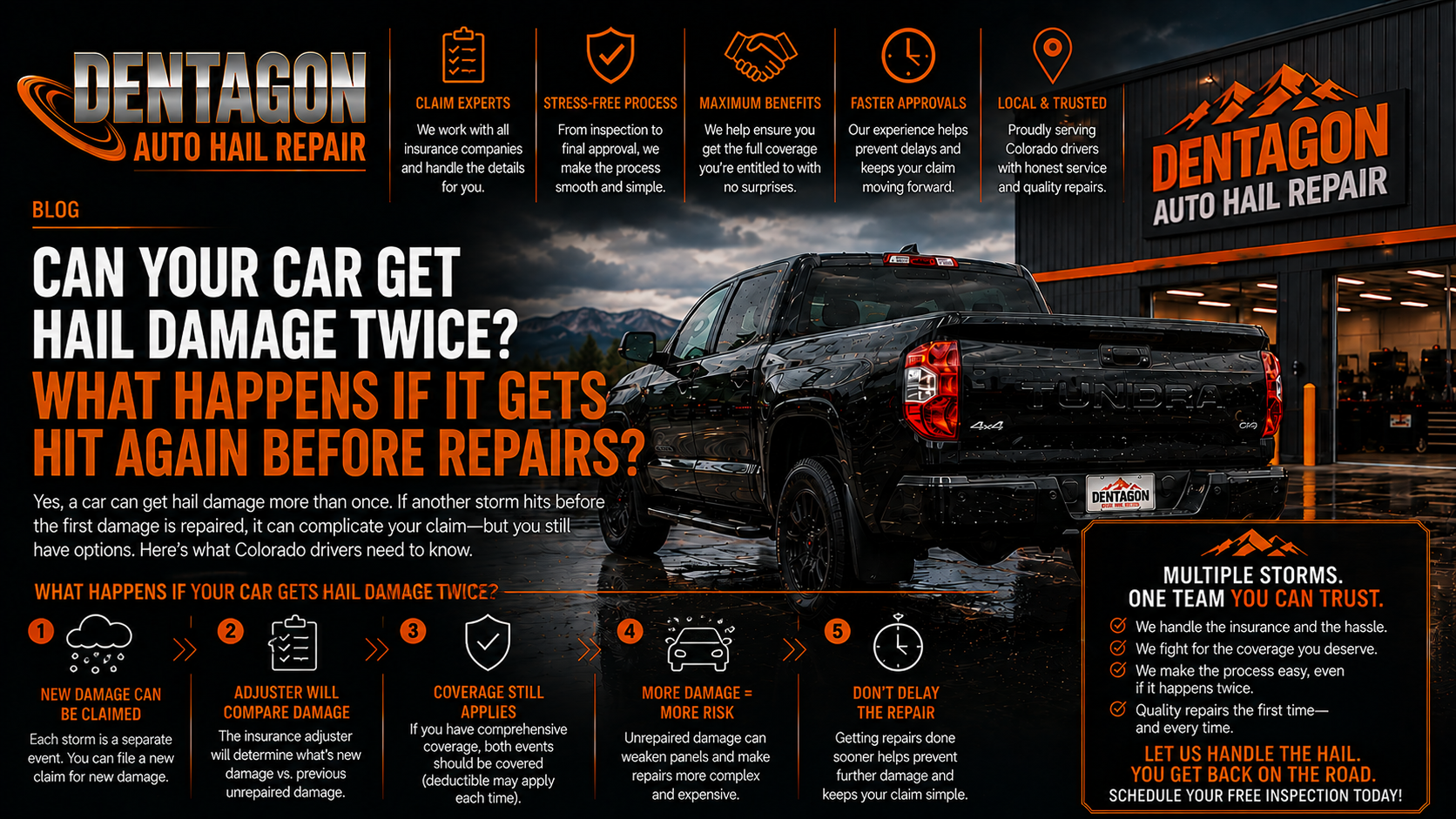
Can Your Car Get Hail Damage Twice? What Happens If It Gets Hit Again Before Repairs?
What Happens When an Already Hail-Damaged Vehicle Gets Hit Again?
Colorado hail season can be relentless.
Your vehicle gets caught in a hailstorm, you discover dents across the hood and roof, and before you have a chance to get the damage repaired, another storm rolls through.
Now what?
A vehicle can absolutely sustain hail damage from more than one storm. The important question becomes determining which damage came from which event—especially when an insurance claim is involved.
If your vehicle already has hail damage and gets hit by another storm, documenting the new damage and understanding how your insurance company handles separate loss events can become important.
At Dentagon Auto Hail Repair, we specialize in professional hail damage inspections, Paintless Dent Repair, and insurance claims assistance for drivers throughout Denver and the surrounding metro area.
If your vehicle has been through one—or multiple—Colorado hailstorms, schedule a FREE inspection and let our team help you understand the damage and your repair options.
Can a Car Get Hail Damage More Than Once?
Yes.
There’s nothing preventing a vehicle with existing hail dents from sustaining additional damage during another storm.
A panel that already contains several dents may receive additional dents from a second hailstorm. Existing dents can potentially become more severe, and previously undamaged panels can also be affected.
The result can be a mixture of:
• Existing hail dents
• New hail dents
• Previously damaged panels with additional damage
• Newly damaged panels
• Dents of different sizes and severity
• Damage caused by separate storm events
This is one reason documenting hail damage soon after a storm can be valuable.
What Should I Do If My Car Gets Hit by Hail Again?
If your vehicle experiences another hailstorm before the original damage has been repaired, start by documenting what happened.
Take photographs of the vehicle as soon as conditions are safe.
If possible, photograph:
• Hood
• Roof
• Trunk or liftgate
• Driver’s side
• Passenger side
• Fenders
• Quarter panels
• Windshield or glass damage
• Any particularly noticeable dents
Also document the date and approximate location of the storm.
Photos may not reveal every hail dent, but they can provide useful documentation showing the condition of the vehicle after the event.
Then arrange for a professional hail damage inspection.
Why Is It Difficult to Separate Old Hail Damage From New Hail Damage?
Hail dents don’t come with timestamps.
If a vehicle already has dozens of dents across the hood and another storm adds additional dents to the same hood, determining exactly which dent occurred during which storm may be difficult.
The challenge becomes greater when the original damage was never professionally documented.
Different storms can also produce different types of damage.
One storm may create numerous small, shallow dents while another produces fewer but larger or deeper dents.
However, you shouldn’t assume that visual differences alone will always prove when a particular dent occurred.
Insurance companies evaluate claims according to the circumstances, documentation, policy terms, and their own investigation.
That’s why early documentation can matter.
Is a Second Hailstorm a Separate Insurance Claim?
Potentially, yes.
Insurance claims are generally tied to a specific loss event.
If your vehicle is damaged during one hailstorm and then sustains additional damage during a separate storm on another date, the insurance company may consider those separate losses.
That means the second storm could potentially involve a separate claim and deductible.
However, the exact way your situation is handled depends on your insurance company, policy, dates of loss, existing damage, and circumstances surrounding each storm.
Don’t assume that two hailstorms will automatically be combined into one claim.
Likewise, don’t assume that you should automatically open another claim without first understanding the damage and your coverage.
If you’re unsure, review your policy and speak with your insurance company about your specific situation.
Could I Have to Pay Two Deductibles?
If the insurance company treats the storms as two separate covered losses, separate deductibles could potentially apply.
For example, imagine your vehicle is damaged during a storm in June and you file a comprehensive claim.
Before the June damage is repaired, another storm damages the vehicle in July.
If the insurer determines that the July storm caused separate additional damage and treats it as another claim, the deductible provisions of your policy could apply to that second loss as well.
The exact outcome depends on your policy and insurer.
This is another reason it can be beneficial to have hail damage professionally inspected and documented after the first storm rather than waiting indefinitely.
Should I Wait Until Hail Season Is Over to Repair My Car?
It’s understandable why some Colorado drivers consider doing this.
You may think:
“Why repair it now if it might hail again next month?”
But waiting isn’t always the simplest option.
Leaving the first storm’s damage unrepaired can potentially make things more complicated if the vehicle is hit again.
Potential issues include:
• Separating old damage from new damage
• Establishing dates of loss
• Documenting which panels were previously damaged
• Determining whether existing dents became worse
• Handling multiple insurance claims
• Potentially dealing with separate deductibles
• Repair-shop backlogs following major storms
Colorado’s hail season can also create significant demand for qualified Paintless Dent Repair technicians.
After a major storm, repair schedules can fill quickly.
Having your vehicle inspected early gives you a better understanding of the damage and allows you to make an informed decision about repairs.
Why a Professional Inspection After the First Storm Matters
One of the most useful things you can do after your vehicle is damaged by hail is have the damage properly inspected.
Professional PDR technicians use specialized lighting systems that make subtle dents much easier to identify.
During an inspection, technicians can evaluate:
• Which panels are damaged
• Approximate dent counts
• Dent size and severity
• Paint condition
• Panel accessibility
• Whether PDR is appropriate
• Areas requiring additional repair methods
This creates a much clearer picture of the vehicle’s condition after the initial storm.
If another storm occurs later, having information about the original damage may help distinguish the vehicle’s previous condition from additional damage.
Can Insurance Tell Which Hail Damage Is Old?
Sometimes there may be evidence that helps an insurer evaluate whether damage existed before a particular date of loss, but there isn’t a universal method that can determine the exact age of every dent.
Insurance companies may consider information such as:
• Previous claim records
• Prior insurance estimates
• Vehicle photographs
• Inspection reports
• Repair documentation
• Previous damage records
• Date and location of reported storms
• Condition of different damaged areas
If a previous hail claim was filed, the insurer may already have photographs and documentation showing the earlier damage.
This is another reason accurate documentation matters.
What If I Already Filed a Claim for the First Storm?
If you’ve already filed an insurance claim for the original hailstorm, keep your claim documentation.
That can include:
• Claim number
• Insurance estimate
• Photographs
• Adjuster information
• Emails or claim correspondence
• Repair facility estimates
• Supplemental estimates
If the vehicle experiences another hailstorm before repairs are completed, contact your insurer and explain what happened.
Don’t simply change the original date of loss or assume the additional damage belongs under the existing claim.
Your insurance company can explain how it wants the additional event handled under your policy.
What If I Haven’t Filed a Claim Yet?
If you haven’t filed a claim for the original damage and another storm occurs, the situation can become more complicated because the vehicle may now contain damage from multiple events.
Be accurate when speaking with your insurance company.
Don’t attempt to attribute older damage to a newer storm or choose a date of loss simply because it appears more convenient.
Insurance claims should accurately reflect what happened.
If you’re unsure how much damage the vehicle has sustained, having it professionally inspected can help you understand the physical condition of the vehicle before deciding what to do next.
Can Paintless Dent Repair Fix Damage From Multiple Hailstorms?
Potentially, yes.
The fact that dents were caused by multiple storms doesn’t automatically prevent Paintless Dent Repair from being used.
PDR eligibility depends primarily on the physical condition of the damage.
Technicians evaluate factors such as:
• Dent depth
• Dent size
• Metal stretching
• Paint condition
• Panel location
• Access behind the panel
• Previous repairs
• Overall severity of the damage
If the factory paint remains intact and the metal hasn’t been damaged beyond what can reasonably be restored with PDR, many dents may still qualify.
Learn more about our Paintless Dent Repair services.
What If the Second Storm Makes Existing Dents Worse?
A second hailstorm can potentially add damage to an already affected panel.
For example, a hood that already contains numerous small dents could be struck again by larger hail.
That could result in additional dents, deeper damage, or damage to areas that weren’t affected during the original storm.
This is another situation where professional inspection and previous documentation become valuable.
Rather than trying to determine the extent of the new damage yourself, have the vehicle evaluated under proper PDR lighting.
What If My Insurance Estimate Doesn’t Include All the Hail Damage?
Whether your vehicle has experienced one storm or several, an initial insurance estimate may not identify every dent.
Hail damage can be difficult to see under ordinary lighting.
A professional repair inspection may reveal additional dents or repair procedures that weren’t included in the original estimate.
When appropriate, the repair facility can document additional covered damage and submit a supplement to the insurance company for review.
The insurance company then determines whether the additional repair items are covered under the claim.
Learn more about our Insurance Claims Assistance program.
Should I Repair the First Hail Damage Before Another Storm Happens?
No one can predict exactly when or where the next Colorado hailstorm will occur.
But there are advantages to addressing existing damage rather than leaving it indefinitely.
Repairing qualifying damage can:
• Restore the appearance of your vehicle
• Protect its resale and trade-in appeal
• Establish a clear repaired condition
• Reduce confusion between old and new damage
• Preserve the factory finish when PDR is appropriate
• Prevent existing damage from complicating future inspections
If you’re unsure whether repairing immediately makes sense, start with an inspection.
Understanding the amount of damage gives you better information for deciding what to do.
Does Hail Damage Lower Your Vehicle’s Value?
Unrepaired hail damage can negatively affect the appearance, resale value, and trade-in value of a vehicle.
The impact depends on the severity of the damage, vehicle age, overall condition, market value, and other factors.
One advantage of Paintless Dent Repair is that qualifying hail dents can be removed while preserving the original factory finish.
For vehicle owners concerned about maintaining the appearance and value of their vehicle, properly repairing hail damage can be worth considering.
How Dentagon Helps With Hail Damage Insurance Claims
Dealing with hail damage can already be frustrating.
Multiple storms can make the situation even more confusing.
Dentagon helps customers understand the repair process and can assist with the repair-related portion of qualifying insurance claims.
We can help with:
• Professional hail damage inspections
• Reviewing insurance estimates
• Documenting vehicle damage
• Paintless Dent Repair
• Supplemental repair documentation
• Communication with insurance adjusters
• Insurance claims assistance
• Deductible assistance for qualifying repairs
Our goal is to make the repair process as straightforward as possible while providing professional repairs and clear information.
Serving Denver and Surrounding Communities
Dentagon Auto Hail Repair serves drivers throughout the Denver metro area, including:
• Arvada
• Aurora
• Brighton
• Broomfield
• Castle Rock
• Centennial
• Denver
• Englewood
• Highlands Ranch
• Lakewood
• Littleton
• Parker
• Westminster
Whether your vehicle was damaged during one hailstorm or has been caught in multiple storms, our team can inspect the damage and help you understand your repair options.
Schedule Your Free Hail Damage Inspection
If your vehicle has already been damaged by hail, don’t wait for another storm to find out how extensive the damage really is.
Dentagon Auto Hail Repair can perform a detailed inspection, identify damaged panels, determine whether Paintless Dent Repair is appropriate, and help you understand the repair process.
If you’ve already filed an insurance claim, bring your estimate and claim information with you.
If you haven’t filed a claim yet, we can still inspect the vehicle so you have a better understanding of the damage.
Schedule your FREE hail damage inspection today.